TEXPROCIL

Webinar on MOOWR (Manufacturing and Other Operations in Warehouse) scheme to be held today at 3 pm.

Do you know, under MOOWR Scheme exporters can import raw materials and machinery 100% duty-free with zero export obligations.?

CBIC's MOOWR Scheme is an ultimate game-changer scheme for Textile Manufacturing and exports.

Learn, How this scheme can rescue your cash flow by removing upfront duty burden?

LiVE TODAY at 3.00pm

CREDITS: The piece of information is derived from Ramitha Shetty <This email address is being protected from spambots. You need JavaScript enabled to view it.> an official id. The content has not been edited and reviewed by us.

IndiaApparel&AccessoriesFair2026Tokyo

India Apparel & Accessories Fair 2026, Tokyo

India Apparel & Accessories Fair 2026, scheduled from 29 – 31 July, 2026, Tokyo, Japan. The fair is being organised by AEPC in association with JIIPA to promote Indian apparel, fashion, textiles and lifestyle products in the Japanese market.

Japan is one of the world's most important and premium import markets for apparel and fashion products. As the 4th largest importer of readymade garments globally, Japan offers significant untapped potential for Indian exporters, particularly in premium, sustainable and value-added segments.

India's exports to Japan have shown consistent growth, increasing from US$ 224.6 million in 2021 to US$ 282.4 million in 2025. India's market share has also increased from 0.9% to 1.2% during the same period, reflecting rising acceptance of Indian products in Japan.

AEPC

Dr A. Sakthivel, Chairman of the Apparel Export Promotion Council, today met Shri Piyush Goyal, Hon’ble Union Minister of Commerce and Industry, Shri Shivraj Singh Chouhan, Hon’ble Union Minister of Agriculture and Farmers Welfare, and Shri Giriraj Singh, Hon’ble Union Minister of Textiles, along with a delegation from the apparel industry and submitted representations seeking reduction of import duty on cotton from the existing 11 per cent to 0 per cent.

During the discussions, the delegation highlighted the challenges being faced by the apparel and textile industry due to high cotton prices and rising input costs. The industry representatives emphasised that India has recently entered into several Free Trade Agreements, creating significant opportunities for growth in textile and apparel exports. However, competing apparel exporting nations are able to access cotton at internationally competitive prices, whereas Indian manufacturers continue to face higher raw material costs due to the prevailing import duty structure.

More about: ,
AEPC

AEPC Welcomes ECLGS 5.0 Approval; Calls It Timely Relief for MSME Exporters

New Delhi, May 5, 2026: The Apparel Export Promotion Council (AEPC) has welcomed the Union Cabinet’s approval of the Emergency Credit Line Guarantee Scheme (ECLGS) 5.0, announced under the leadership of Prime Minister Shri Narendra Modi, terming it a timely measure to support businesses amid the West Asia crisis.

AEPC Chairman Dr. A. Sakthivel said:

“ECLGS 5.0 will provide crucial liquidity support to MSME exporters, helping sustain production, protect jobs, and maintain supply chains during this challenging period. The 100% guarantee and zero fee will further ease credit access.”

TextileApparelExports

Textile Output Dips on Oil Surge, Input Cost Pressure

India’s textile and apparel sector witnessed a sharp slowdown in March 2026 as escalating crude oil prices and rising raw material costs — triggered by the ongoing Iran conflict — severely impacted manufacturing activity across key textile categories.  

According to industry data, textile manufacturing contracted by 3.6% year-on-year, while apparel production plunged nearly 14.6%. Segments including readymade garments, blended fabrics, woven cotton fabrics and home textiles recorded significant declines amid mounting operational pressures.  

IndiaNZFTA

AEPC Welcomes India–New Zealand FTA.The Apparel Export Promotion Council (AEPC) has welcomed the signing of the India–New Zealand Free Trade Agreement (FTA), signed between India’s Hon’ble Commerce & Industry Minister (HCIM) Shri Piyush Goyal and Hon. Todd McClay, Minister for Trade and Investment, New Zealand, calling it a significant milestone that will unlock new growth opportunities for India’s textile and apparel sector.

AEPC Chairman Dr. A. Sakthivel said,“ This forward-looking agreement is a major boost for India’s apparel exporters. With 100% duty-free access to the New Zealand market, Indian products will gain immediate price competitiveness, particularly in labour-intensive segments such as garments and textiles. This will support higher export volumes, job creation, and growth of MSMEs across the value chain.”

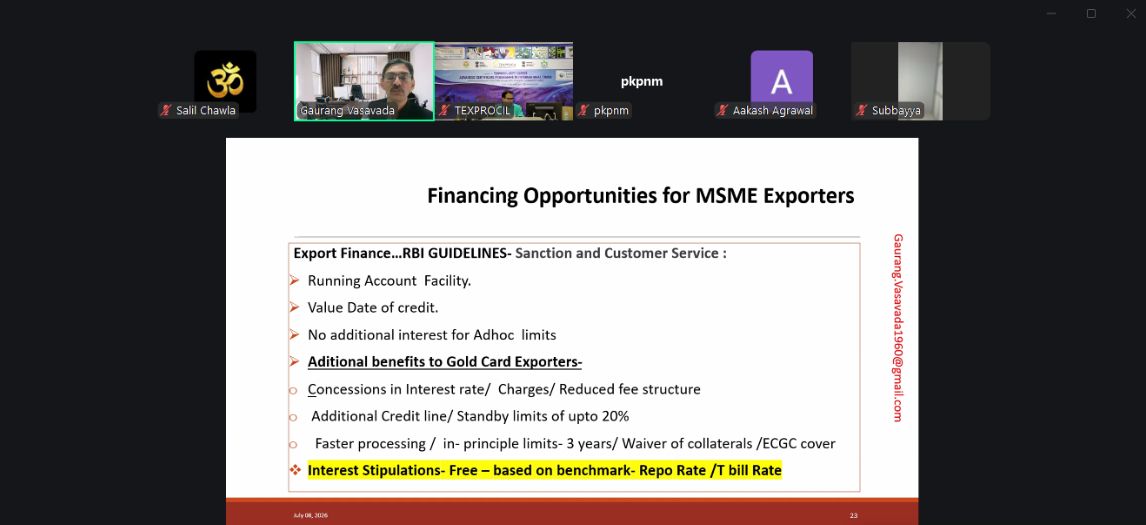
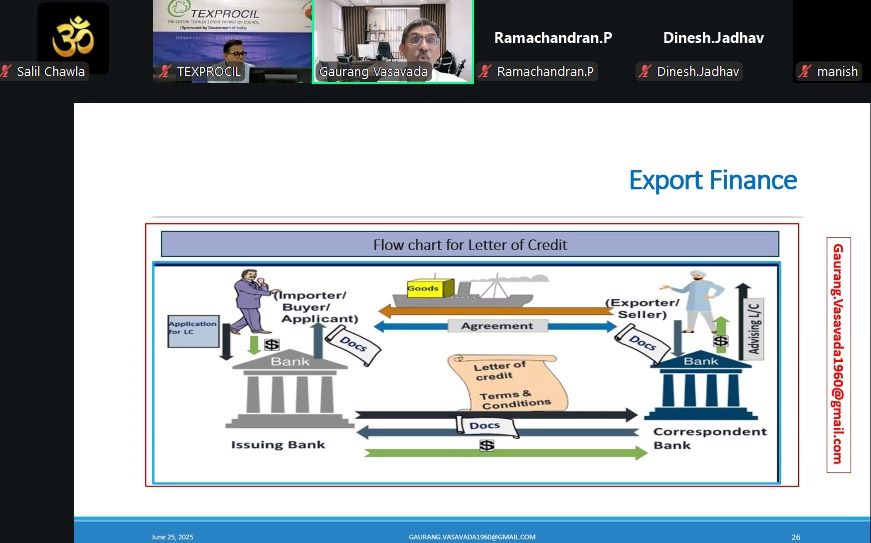
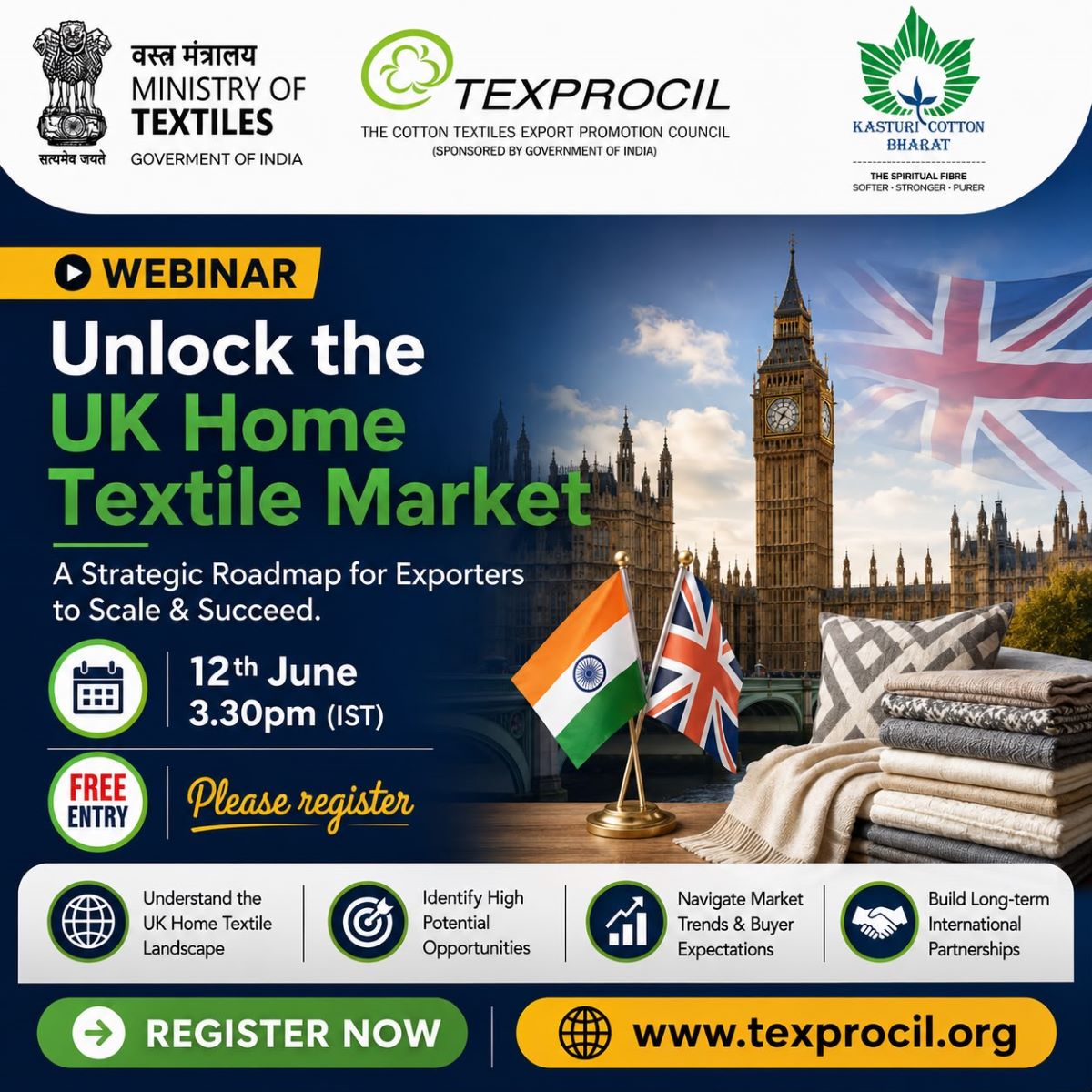
TEXPROCIL webinar: Export bill regularization - Closure of shipping bill & payment in EDPMS

Texprocil is organising a Webinar on Export bill regularization - Closure of shipping bill & payment in EDPMS in Collaboration with ICICI Bank.

This session will provide the following benefits to exporters :
Practical guidance on functioning of Export Data Processing and Monitoring System (EDPMS)
Step-by-step process for closure of shipping bills in a timely manner
Insights on export payment realization, including delays, short payments, and write-offs
Avoidance of penalties and issues related to overdue export bills.

More about: ,
IndiaAseanTies

NITMA Welcomes Duty-Free PTA & MEG; Urges Correction of Decade-Long "Inverted Duty" Anomaly in India-ASEAN FTA.

The Northern India Textile Mills’ Association (NITMA) has hailed the Central Government’s landmark decision to eliminate Customs Duty on PTA and MEG until June 30, 2026.
While thanking the Hon'ble Prime Minister Narendra Modi Ji, Hon'ble Union Minister J.P. Nadda Ji and Hon'ble Minister for Textiles Giriraj Singh Ji for this vital relief amidst West Asian supply chain disruptions, NITMA President Sidharth Khanna emphasized that this window of support must be extended if global volatility persists to truly stabilize the Man-Made Fiber (MMF) sector.

India’s textile industry: Regulatory reset where compliance drives sustainable growth 

Ushering in a new regime From Jail to Compliance

Ease of doing
Good news; India’s textile sector is likely to be on the cusp of a significant regulatory reset—one that signals a more practical and business-friendly approach for the industry. As indicated/intended in the policy update, the long-standing provision under the Textiles Committee Act that may lead to imprisonment of up to one year (in limited sense decriminalization) for exporting or selling textiles or textile machinery in violation of prescribed orders is proposed to be done away a step in the direction of ease of conducting businesses.

WPI

Feb., 2026 WPI Edges Up as much as 2.13%: Textile prices amongst the culprits

Textile Prices Stitch Inflation Higher
India’s wholesale inflation surprisingly inches up to 2.13% in February 2026, denoting a subtle but notable trend shift in price momentum (Notwithstanding; "World turned on its head" as US Iran war broke out on 28th Feb., 2026)—the inflation drivers are in part by rising costs in the textile segment. Though it has to be mentioned here that, While overall inflation remains within RBI manageable band, the upending signals anchored in upward risks to pressures building across supply chains, especially witnessed in areas such as raw materials and fabric processing.

Follow Us

Subscribe Our Newsletter
Amazing Deals, Updates & Freebies In Your Inbox
Please fill the required field.

People's Poll

War on Trade: India's RMG in Peril

People's Poll -2

How sustainability is driving India's textile industry

Social & newsletter

Search