
The Intelligent Shop Floor: Modernising Industrial Engineering for Better Productivity
Date & Time
Aug 4, 2026 02:00 PM
Description
The Future of Industrial Engineering Is Here
The Intelligent Shop Floor: Modernising Industrial Engineering for Better Productivity
Date & Time
Aug 4, 2026 02:00 PM
Description
The Future of Industrial Engineering Is Here
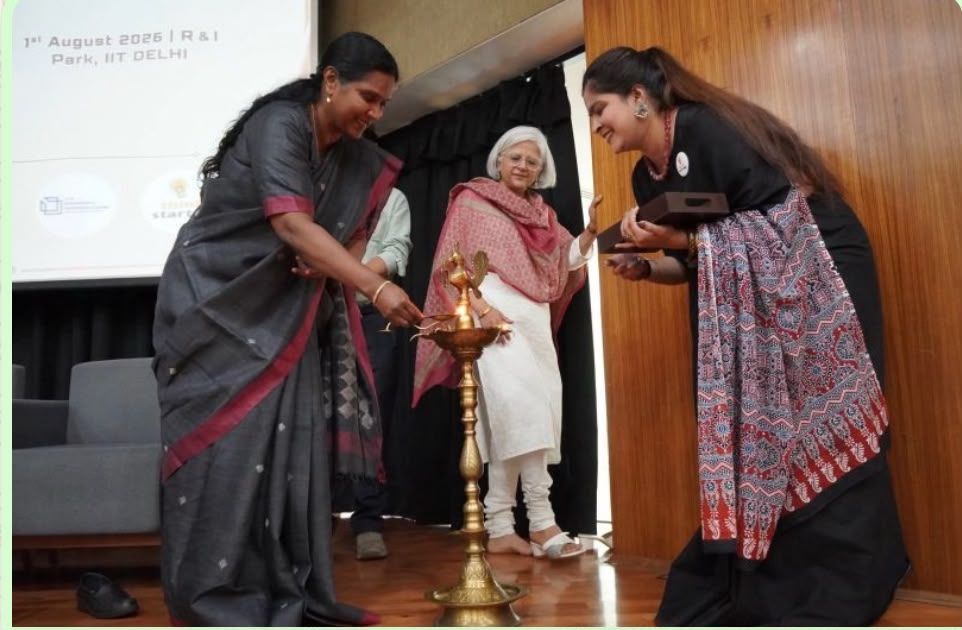
Handloom Hackathon 2.0, inaugurated by Dr. M. Beena, Development Commissioner (Handlooms), at IIT Delhi, marks a new step towards empowering India's handloom sector through technology and innovation.
Bringing together young innovators, researchers and experts from across the country, the Hackathon showcased technology-driven solutions to strengthen weaver livelihoods, promote sustainability and enhance the global competitiveness of Indian handlooms.
CREDITS: Text taken directly from Ministry of Textiles, Government of India official Linkedin post and used as it is.

Artificial Intelligence (AI) is rapidly transforming global trade. Leading textile exporters worldwide are already using AI to identify buyers, prepare quotations, conduct market research, generate export documents, analyse regulations, improve production methods, increase productivity, improve supply chain efficiency, achieve just-in-time delivery, improve management, improve inventory management, and enhance the skills of labour force and not cause its displacement.

As covered by Salil Chawla, Director, DFU Publications, as a participant.
Customs audits are no longer a rare or exceptional event. They are a regular and powerful tool used by the revenue department to protect government revenue, detect irregularities, and enforce compliance.
When discrepancies are found—whether in valuation, classification, exemption claims, or documentation—the consequences can be serious. The department can recover differential duty along with interest and impose penalties. In many cases, enquiries can go back several years, creating financial and operational disruption for the business.
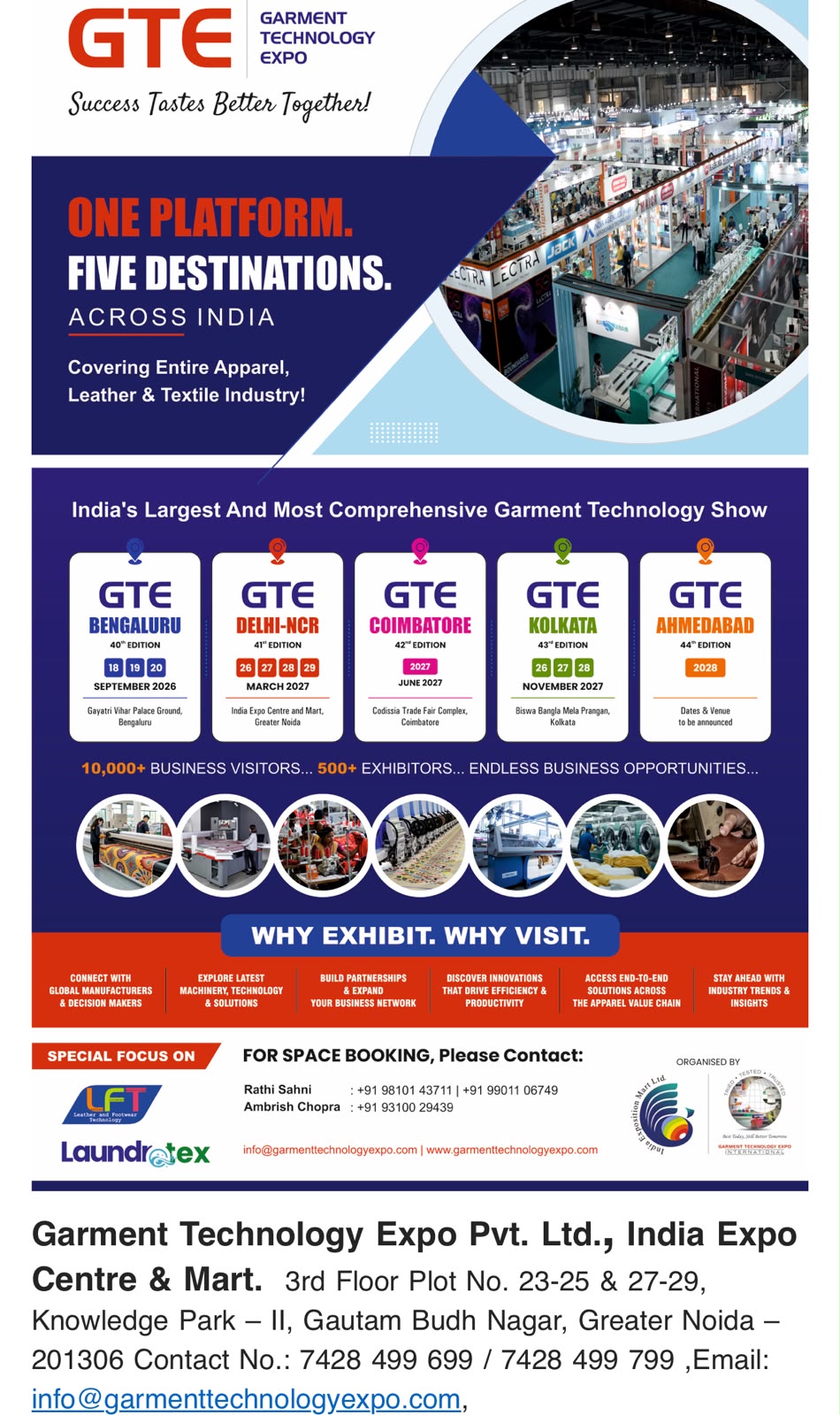
After a very successful 39th edition of GTE-2026 at Greater Noida, we now move forward to our most awaited regional show in Bangalore, 40th Edition of GTE’26 Bangalore, which is the most comprehensive exhibition for Apparel Technology at Gayatri Vihar Palace Grounds centrally located with easy connectivity for the Garment Industry of South India.
Credits: PR as received from

webinar: AI Decision Intelligence for Spinning Mills
Webinar Details:
Date / Time: 24th July 2026 - 11:00 AM IST / 24th July 2026 - 12:30 PM WIB
Speaker: A T Kumar - Aladdin365,Mani Thangavel - Kalpatharu Software Ltd
Moderator: Dharunya V - Aladdin365.
webinar: AI Decision Intelligence for Spinning Mills
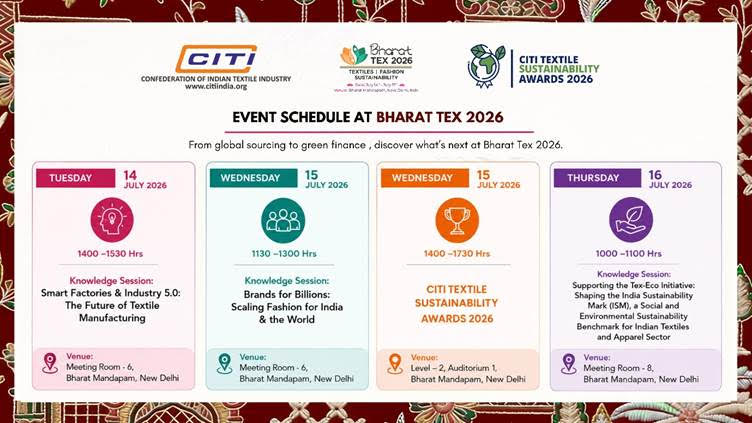
CITI Knowledge Session on Smart Factories & Industry 5.0 | Bharat Tex 2026
the Confederation of Indian Textile Industry (CITI)!
India's textile and apparel industry stands at a pivotal moment, driven by growing global demand, evolving sustainability imperatives, rapid technological advancements, and emerging trade opportunities.
As a key industry partner of Bharat Tex 2026, CITI is pleased to organize a Knowledge Session on "Smart Factories & Industry 5.0: The Future of Textile Manufacturing" 14th July 2026, from 2:00 PM to 3:30 PM at Meeting Room – 7.

Webinar on Aladdin365 – SPINNOVA – AI Decision Intelligence for Spinning Mills
SPINNOVA – AI Decision Intelligence for Spinning Mills
Webinar Details:
Date / Time: 11th July 2026 - 3:00 PM IST / 11th July 2026 - 4:30 PM WIB
Speaker: Dharunya V - Aladdin365
Moderator: Jerin J - Aladdin365
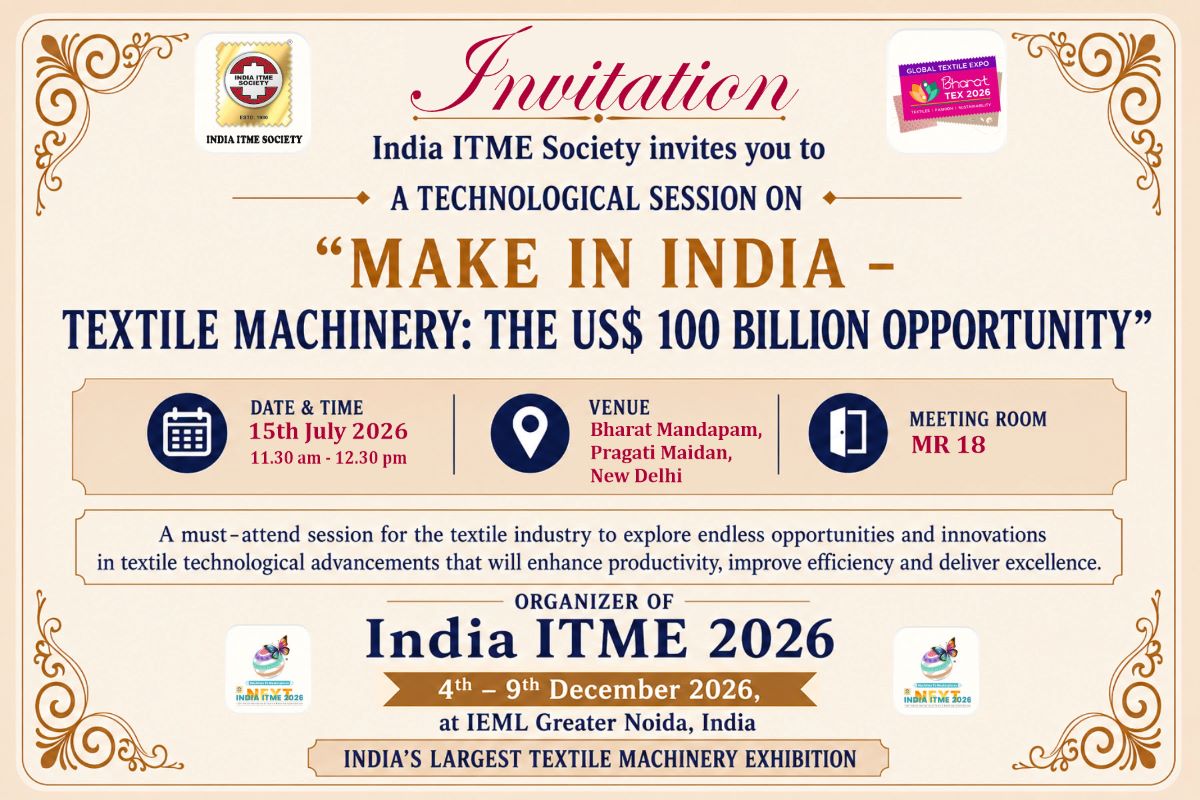
Invitation to attend Panel Session by India ITME Society at Bharat Tex 2026
ITME invite you to attend an enthralling Technological session on “Make in India – Textile Machinery: The US$ 100 Billion Opportunity” organized by India ITME Society at Bharat Mandapam, Pragati Maidan, New Delhi on 15th July 2026 from 11.30 am.
Theme: Make in India – Textile Machinery: The US$ 100 Billion Opportunity
Speakers & Panelists.

Traditional Industrial Engineering methods are slowing factories down. Manual motion studies, disconnected workflows, and inconsistent standard setting make it difficult to achieve higher productivity and operational excellence.
Join Coats Digital for an exclusive FREE webinar on 4th August 2026 at 2:00 PM IST and discover how AI-powered Industrial Engineering is helping garment manufacturers modernise shop-floor operations, improve productivity, and make smarter operational decisions.
Why Attend? Discover why traditional IE workflows are no longer enough.
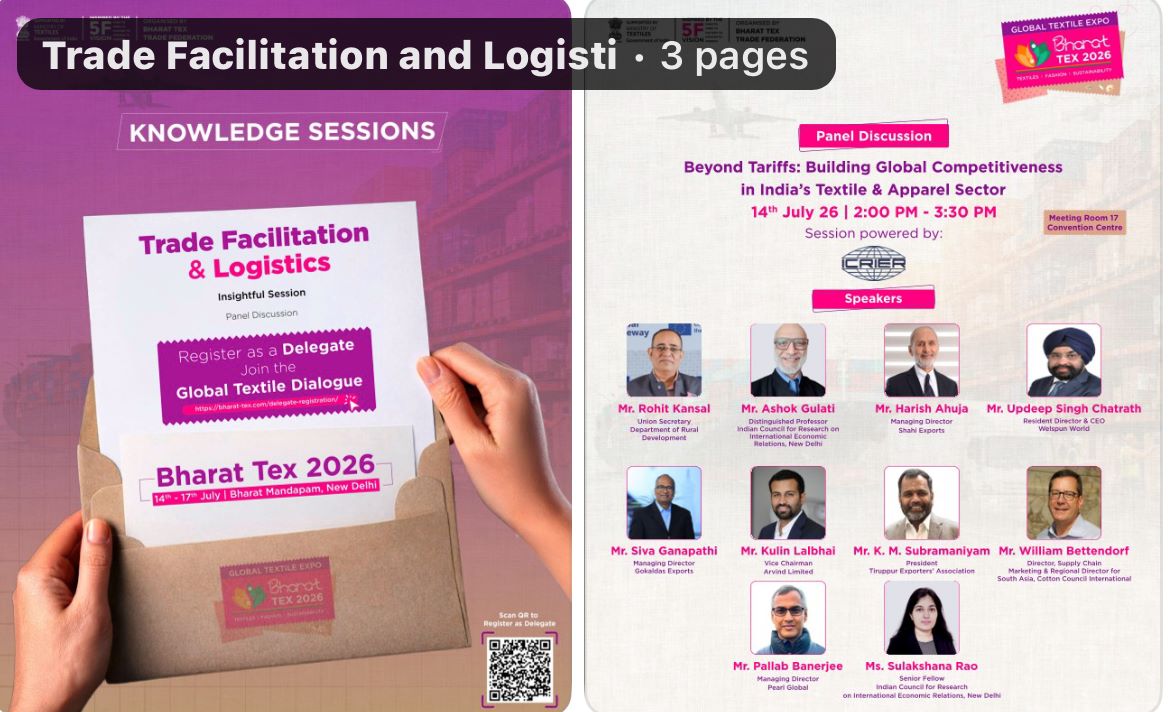
𝐒𝐡𝐚𝐩𝐞 𝐭𝐡𝐞 𝐅𝐮𝐭𝐮𝐫𝐞 𝐨𝐟 𝐆𝐥𝐨𝐛𝐚𝐥 𝐓𝐞𝐱𝐭𝐢𝐥𝐞 𝐓𝐫𝐚𝐝𝐞 𝐚𝐭 𝐁𝐡𝐚𝐫𝐚𝐭 𝐓𝐞𝐱 𝟐𝟎𝟐𝟔!
Join policymakers, industry pioneers, exporters, and global trade experts for an insightful hashtag#PanelDiscussion on "Beyond Tariffs: Building Global Competitiveness in India's hashtag#Textile & hashtag#Apparel Sector."
As global trade continues to evolve, discover how India can strengthen its position through resilient supply chains, strategic trade partnerships, policy reforms, and enhanced export competitiveness.
𝐒𝐡𝐚𝐩𝐞 𝐭𝐡𝐞 𝐅𝐮𝐭𝐮𝐫𝐞 𝐨𝐟 𝐆𝐥𝐨𝐛𝐚𝐥 𝐓𝐞𝐱𝐭𝐢𝐥𝐞 𝐓𝐫𝐚𝐝𝐞 𝐚𝐭 𝐁𝐡𝐚𝐫𝐚𝐭 𝐓𝐞𝐱 𝟐𝟎𝟐𝟔!
Join policymakers, industry pioneers, exporters, and global trade experts for an insightful hashtag#PanelDiscussion on "Beyond Tariffs: Building Global Competitiveness in India's hashtag#Textile & hashtag#Apparel Sector."
As global trade continues to evolve, discover how India can strengthen its position through resilient supply chains, strategic trade partnerships, policy reforms, and enhanced export competitiveness.
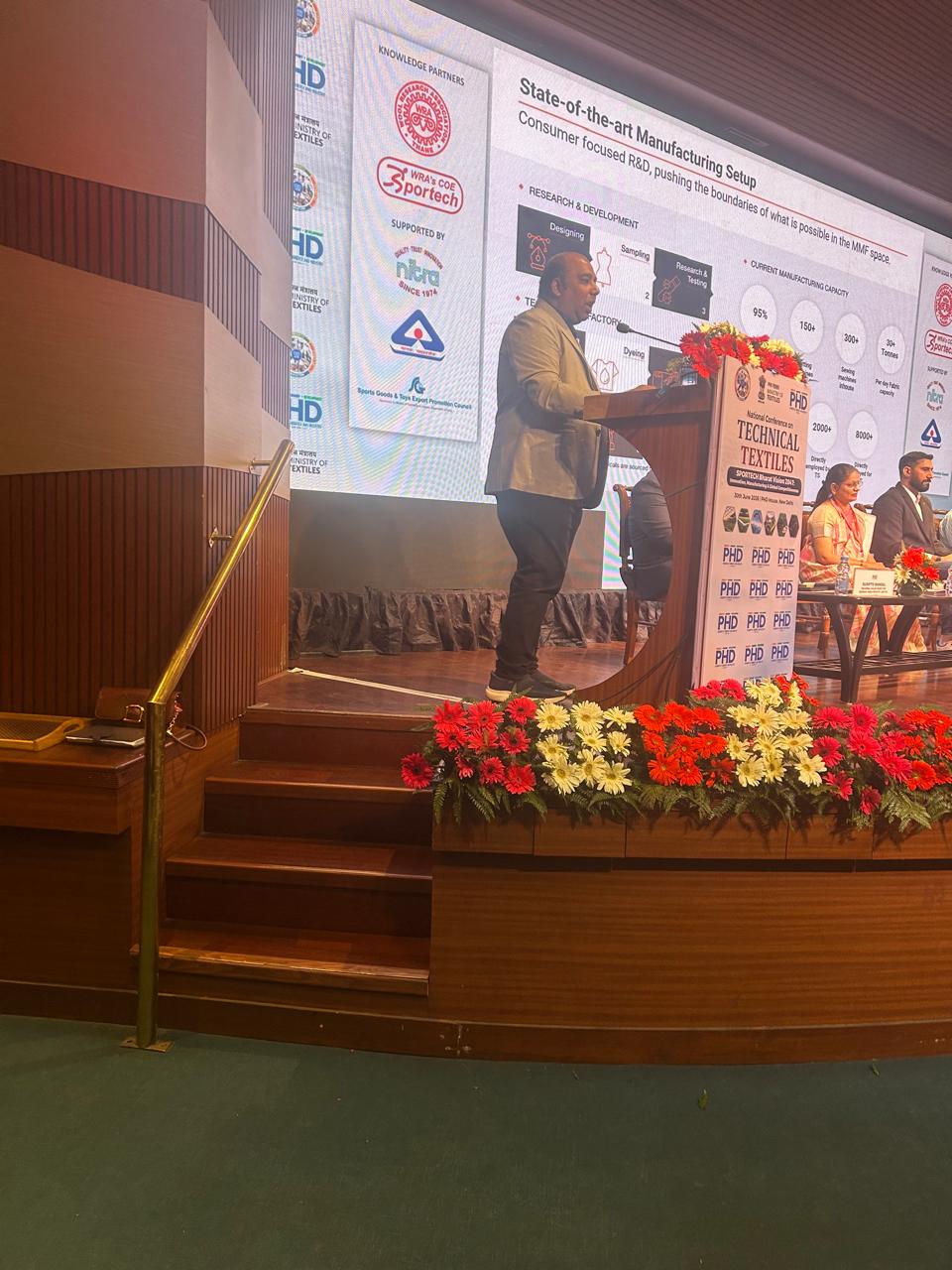
Gym-to-Street Revolution: TechnoSport Builds India’s Next-Gen Sportech Ecosystem
PHDCCI’s National Conference on Technical Textiles spotlighted how India can build a complete ecosystem for its fast-growing Sportech and activewear industry, with TechnoSport showcasing a rapid innovation model that connects advanced textile technology, consumer-centric R&D, and agile market deployment.
Context and coverage
As covered by Salil Chawla, Director, DFU Publications, in his capacity as a delegate at the “National Conference on Technical Textiles” organised by PHD Chamber of Commerce and Industry (PHDCCI), one of the key panel discussions focused on “Building a Complete Ecosystem for India’s Sportech Industry.” In this context, Sunil Jhunjhunwala, Co‑founder & Co‑worker at TechnoSport, shared how the brand is leveraging technical textiles to solve everyday performance-wear challenges while scaling for global markets.

NITRA’s Role in Advancing Sports Textiles: From Protective Textiles to Market-Driven Innovation
As covered by Salil,Chawla, Director DFU Publications in the capacity of delegate yesterday "National Conference on Technical Textiles" organised by PHDCCI. Excerpts from Dr. M.S Parmar - Director General, NITRA address during one of the panel discussions:
Address at the National Conference on Technical Textiles
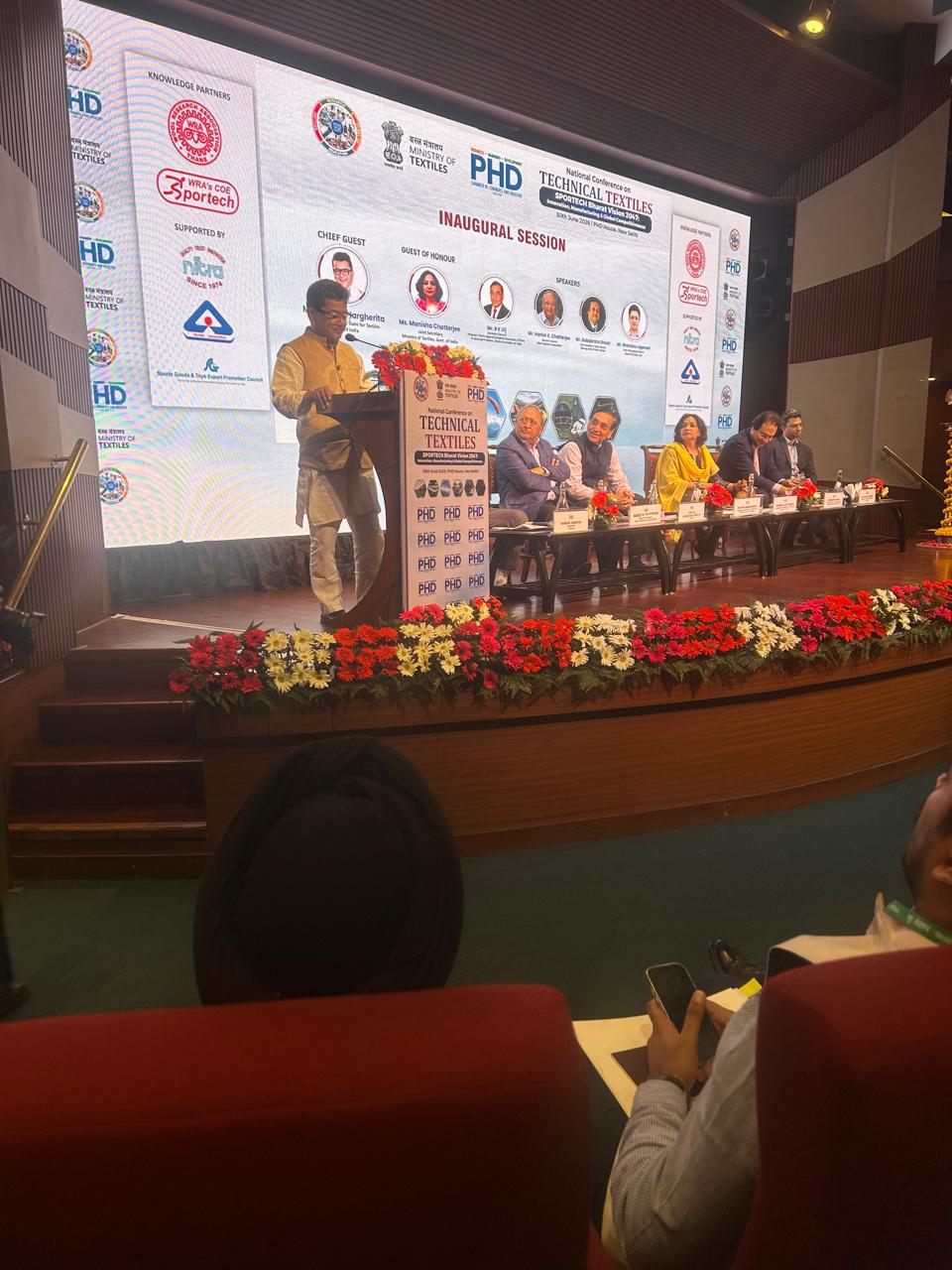
As covered by Salil,Chawla, Director DFU Publications in the capacity of delegate today "National Conference on Technical Textiles" organised by PHDCCI. Excerpts from H'ble Pabitra Margherita l Union Minister of State for External Affairs; and Textiles address:
Address at the National Conference on Technical Textiles
A very good morning to everyone.
It is indeed an honour and a privilege for me to address this National Conference on Technical Textiles, which brings together stakeholders who will shape the next chapter of India’s textile journey.


 CONTACT US

