







_large.jpg)


What can work in India's favour:
Many moving parts; As yesterday in the press-conference Donald Trump clearly mentioned the recent barrage of announcements are firm but not 100% firm and, if the nations where the tariff letters have been posted/new tariff announcements have happened could be relooked into with the caveat that, if we get a positive reciprocation that way we are fully open.
Fashion Guru
How things stand presently
Given the things the recently announced 35 percent US tariff on Bangladesh imports into US is a quite certainly is a big plus for India's textile sector more particularly music to the ears for the RMG sector.
From India right now, with the basic duty of 10 percent and another additional duty of 10 percent, which has been going on for the last three months.
Our exports to the US are liable to be charged at the rate of 20 percent duty, and assuming that 35 percent duty on Bangladesh imports is the total one, and not the 35 percent plus the earlier duty of 10 percent. It is very difficult to comment on these tariff issues in such a hasty manner, and in Dr. Mukesh Kansal, Chairman, CTA Apparels opinion it will take another 2-3 weeks to settle everything, and then only a comparable study should be done, and the actual feel about India exports will be clear then only.
Join our group
Focal Point
Industrial goods likely to be in this phase.
Timing: Trade deal expected any moment.
Deliverables expected out of the US
India is anxiously looking to cut a deal by seeking trade concession supporting to labour intensive sectors such as Textiles, Gems, Jewellery, Leather etc.in this mini/interim/framework deal to offset the inherent disadvantages in particular in textile sector been suffering in perpetuity hampering the competitiveness in comparison to its competing countries where they get a headstart for getting unfair advantage of being LDC, MFN, FTAs or all of it with regard to western world exports where maximum textiles is consumed besides greater market market access.
Deliverables expected out India
Data localizations
Exclusivity
Market access for selling GM crops and super facilitation for cattle feed to BHARAT.
Government procurement facilitation
IPR protection
Duty concessions on specific industrial goods amongst whole host of other asks and expectations.
Join our community
Broader scheme of things
India's stated stance remains FTAs are done around national interest rather than casting deadline in stone i.e. negotiating deal on our own terms.
Trump administration is very sanguine that we are close to making a deal with India.
Sticky points
India's politically sensitive sectors like agriculture & dairy are like untouchables/non-negotiable likely to be excluded to arrive at common ground at this stage.to accommodate the deal.
DFU Profile
What lies ahead
Existing business with the US currently FY25 Indo-US/bilateral trade touched $132B. Notably the US is running as a largest India's trade partner now for four (4) consecutive years with US running a material trade deficit year after year.
Expected business anticipated to hit $500B by 2030 and both administration remain constructive on this target.
Mini/Interim deal what all it could encompass
A lot of chatter around sticky issues expected to be out of the deal as of now to be taken in the next phase to keep moving.
Threats
Incremental 10% as India is aligned to BRICS as central I of this extended version of BRICS.
The goal post keeps shifting with no clear-cut endgame "TARIFFS WILL START BEING PAID ON AUG.1ST,2025", says official
communiqué as of now.
LATEST FASHION NEWS
Global headwind; Trump tariff tantrum questionably is to manage deficits/equitable fair trade, at the heart lies the risk of precipitating a global/US recession and upward risk to inflation with slow growth phenomenon.
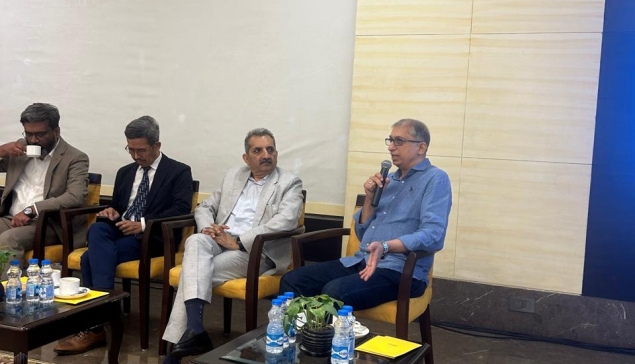
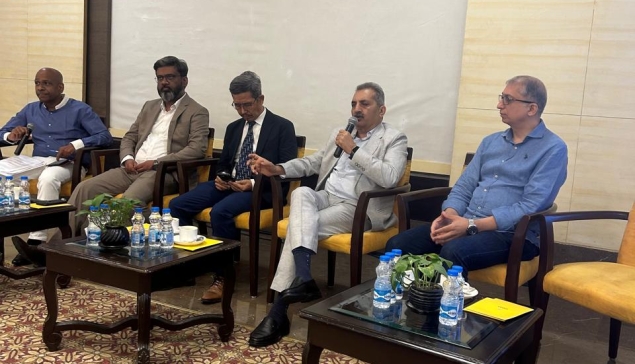
In the recent Salil Chawla, Director DFU Publications interaction with multiple textile trade experts the following came to the fore:
Trade remains constructive on INDO_US BTA that ball is now in Washington's court question everybody seems to asking is where the trade tariff tantrums settles at as Delhi administration is trying to nail down to thrash out the deal arriving at common ground without compromising/hurting India's sovereign interest particularly given that global trade is in downbeat trend and there is an underlying necessity that, in order to buffer our country's growing exports considering exports is a powerful growth engine for our vision 5 trillions$ economy as we move ahead.
Fashion Guru
Reality check
Since our labour intensive sectors like Textiles has certain inheritance issues e.g. effective higher labour cost compared to particularly Bangladesh, Vietnam and in some sense with China where despite of higher labour cost their labour productivity is unmatchable, scale of production consistently remains a serious concern which is not going to get sorted in a hurry though recent government efforts of PLI scheme and certain other financial and credit facilitations/interventions have helped removing some of the roadblocks.
There is a greater insight that the share of MMF has to rise critically if India's textiles is to effectively improve the market share in global marketplace. Again, government policy making and trade bodies' advocacy is helping to break the glass ceiling but still much more needs to be done.
View
God forbid if the trade negotiations with the US fail it will go back to 26% tariff regime and it will be a case of missed opportunity for India more interestingly the nuances of the US-China trade deal details are little known as of now.
Experts are very optimistic around this deal seeing improving textile yarn prospects both protecting the margins and supporting/bump up the sales volume and growth trajectory northwards which is pressing need for the trade at this important time when exports in textile sector is a high priority.
Not easy choices to make: What we need to do differently
The short message is to diversify/ derisk India's textile sector to ensure its secured future the crucial need is as also been recently echoed/iterated by Hob'le FM/Piyush Goyal that if we have to move mountains what is on horizon is that, we have to both look for newer markets and deepen and widen our product basket introducing new categories and the semblance is there is a need to create a new playbook for our exports growth story.
So let us see how the opportunity plays itself outlook in following days.
In short the INDO-US Bilateral Trade Agreement (BTA) is WIN-WIN for both the countries!


 CONTACT US
