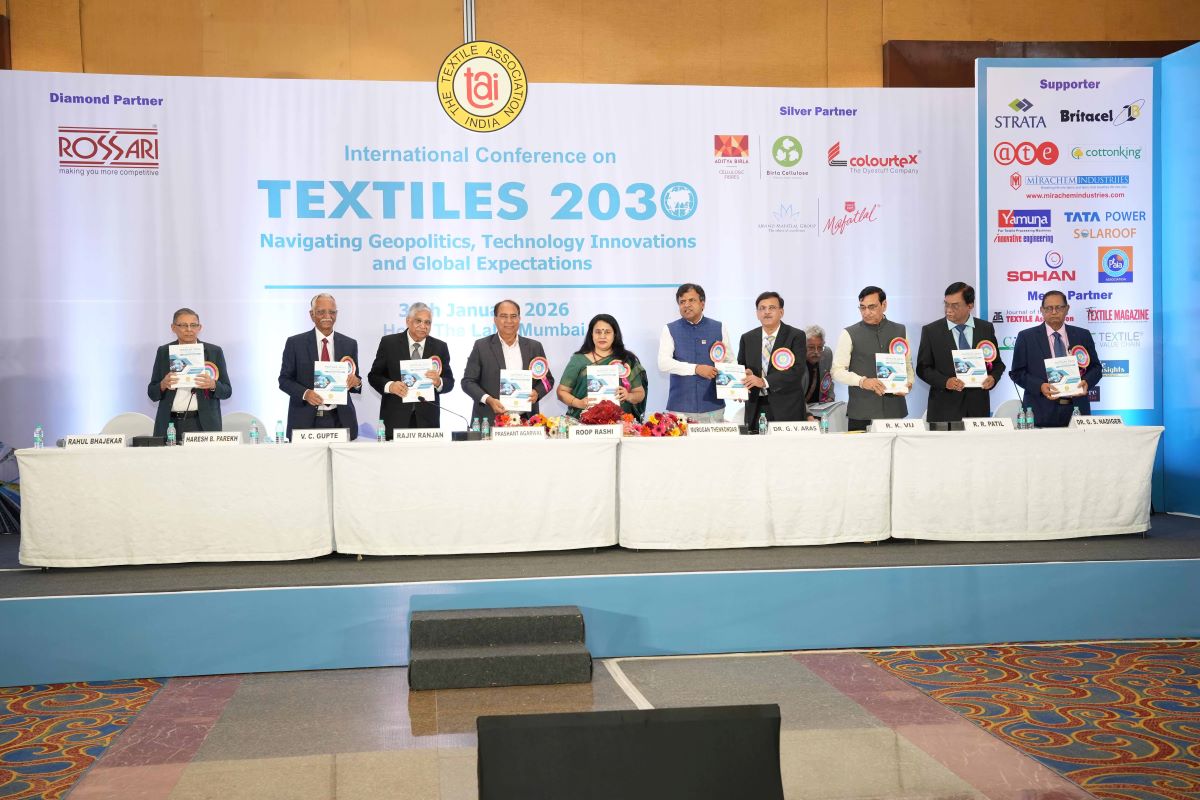
The Textile Association (India), Mumbai Unit organized an International Conference on “TEXTILES 2030 - Navigating Geopolitics, Technology Innovations and Global Expectations” on Friday, 30th January 2026 at Hotel the Lalit, Mumbai. The Conference received overwhelming response with 350 delegates in attendance. The theme of Conference, topics, presentations, and speakers were highly appreciated by one and all. Some of the highlights of the conference are described as under.
V. C. Gupte, Chairman, Textile Association (India), Mumbai Unit and Convener of the Conference, extended a warm welcome to the Chief Guest, Ms. Roop Rashi (IAS), Chief Executive Officer, Khadi and Village Industries Commission (KVIC), Government of India; the Guest of Honour; the Keynote Speaker; awardees; speakers; sponsors; members of the press and media; and all delegates.
In his address, Gupte highlighted the efforts of the TAI Mumbai Unit in consistently organizing conferences on future-oriented themes of national and global relevance, culminating in the 2026 international conference themed “TEXTILES 2030 – Navigating Geopolitics, Technology Innovations and Global Expectations.” He emphasized that the global textile and apparel industry is at a critical juncture, influenced by geopolitical shifts, rapidly evolving technologies, sustainability imperatives, and changing international trade and regulatory frameworks.
He mentioned about the FTAs signed by the Government of India including the most recent FTA signed with European Union which should benefit the T&A exporters and bring back volumes & margins. He suggested to move towards value- added products where competition is less. He stressed on ESG regulations which have become quite stringent, so the awareness should be created amongst the stakeholders. The Conference included a dedicated Panel Discussion by All-Women Panel on the theme of ‘Women Leadership driving a Change in T&A Sector’ which was unique and for the first time in any Conference.
Join our group
Rajiv Ranjan, President, Textile Association (India), Mumbai Unit, in his Presidential Address, highlighted the rapidly changing global landscape facing the textile and apparel industry. He noted that geopolitics, trade realignments, sustainability expectations, and technological disruption are now as influential as cost and quality in global trade. Referring to recent U.S. tariff actions, he emphasized that trade today is increasingly shaped by alignment and perception. He welcomed the signing of the India–EU Free Trade Agreement as a significant opportunity to improve market access, reduce duty disadvantages, and strengthen India’s position as a reliable sourcing partner for Europe, while stressing that preparedness will be key to benefiting from it.
The address underlined that while domestic demand remains strong, exports face pressures from global slowdown, intense competition, and rising compliance requirements. To remain competitive, Indian textiles must combine cost efficiency with sustainability, digital enablement, and innovation. Calling Textiles 2030 a mindset rather than a milestone, he urged the industry to embrace automation, AI, ESG, circularity, design, and branding, and stressed the need for closer collaboration between industry, academia, and government. He concluded by reaffirming India’s resilience and commitment not just to adapt to the future, but to design it.
Sustainability
R. K. Vij, President, Textile Association (India), in his address, emphasized the importance of a forward-looking and globally aligned approach as the textile and apparel industry moves towards the TEXTILES 2030 vision. He highlighted the need for the industry to remain resilient and responsive to changing geopolitical dynamics, evolving global trade environments, and rising international expectations.
The session concluded with an interactive question-and-answer segment, where delegates actively engaged with the panellists on leadership development, career pathways, and the evolving role of women in the textile and apparel industry (T&C). The panellists provided thoughtful and inspiring responses, further enriching the discussion. The event was widely appreciated by the delegates, who represented a broad cross-section of the textile and apparel ecosystem, including manufacturers, exporters, designers, technology providers, academicians, and policy stakeholders.
DFU Profile
Participants commended the conference and panel discussion for offering thoughtful, balanced, and forward-looking perspectives on the challenges and opportunities shaping the textile and apparel industry. In concluding the session, the moderator summarized the key takeaways, emphasizing the importance of:
Adopting a strategic and globally aligned outlook to remain competitive in international markets
Encouraging innovation and adaptability to address evolving industry and market requirements
Integrating sustainability and responsible practices into long-term business strategies
Preparing organizations and professionals for changing global expectations and future industry dynamics.
The conference concluded with a strong collective message that while the textile and apparel industry faces significant global challenges in the coming decade, it also holds substantial opportunities for growth, resilience, and leadership on the world stage. Delegates highlighted the need for collaborative efforts, informed decision-making, and long-term vision to successfully navigate the road to TEXTILES 2030. There was active interaction between speakers and delegates during the question-and-answer sessions as well as informal discussions during tea and lunch breaks, enabling meaningful exchange of ideas and effective dissemination of insights aligned with the conference theme.
CREDITS: PR received from The Textile Association (India), Mumbai Unit official id. The content has not been edited and reviewed by us.


 CONTACT US
