








_large.jpg)



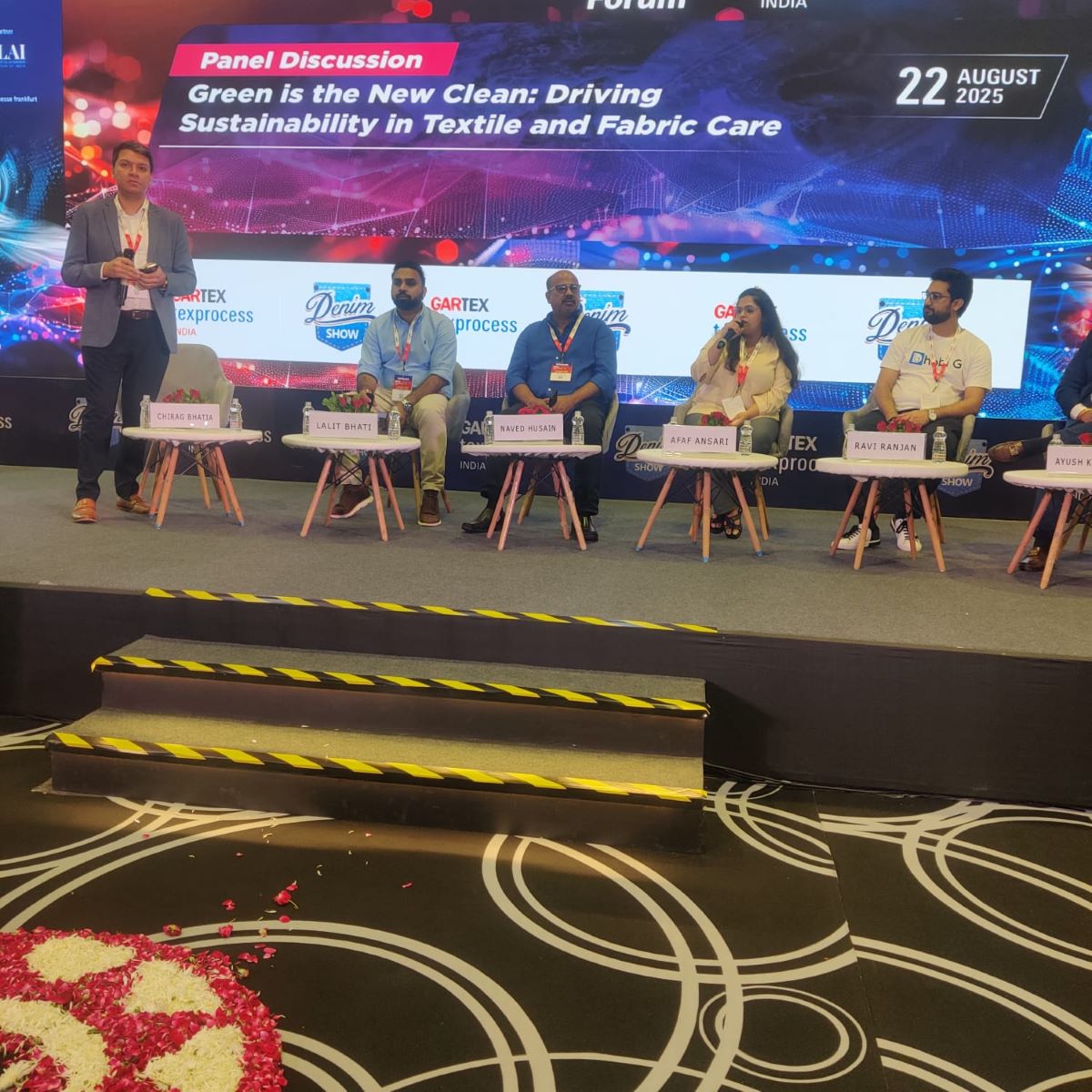
During a panel discussion at Gartex Texprocess India Delhi 2025, experts shared their insights on sustainable practices in the textile and fabric care industry.
THEME of panel discussion; Green is the New Clean: Driving sustainability in Textile & Fabric care,
Small steps, Big Impact
One panelist, representing a company focused on helping micro-entrepreneurs, highlighted their impactful decision to adopt sustainable practices. Their initiative started with selecting machinery and processes that were adaptable to green methods. They also developed training programs to educate their workforce and new entrepreneurs on the importance of sustainability.
Their strategy began with a focus on reducing resource waste, noting that saving on waste creates a significant impact. From there, they transitioned to using biodegradable products and sustainable packaging. This includes replacing conventional materials like plastic bags and cardboard collar strips with plantable paper. These small, cumulative changes aim to help franchisees and small business owners incorporate sustainable practices into their operations.
Join our group
The role of Technology & Chemicals
Another expert discussed the shift in the chemical industry towards more environmentally friendly solutions. Traditionally, the industry relied on chemicals like ammonia, phosphate, and other volatile organic compounds. However, there is a growing movement towards pH-neutral chemicals that pose a lower risk to the environment.
Modern products, such as those from brands like Sites, are now eco-label certified. This certification considers not just the product's ingredients but also its overall environmental footprint, including water and energy consumption. The expert also mentioned thermal insulation in machinery to reduce heat loss and the use of eco-recovery tanks that recycle the final rinse water for the next wash cycle. This simple change can lead to water savings of 30-40% per laundry load. While these new systems may involve an initial capital expense, the long-term savings on water and energy often compensate for the upfront cost.
Join our community
Business Benefits of going Green
The panel also debated whether being green is a competitive advantage or just a compliance measure. One speaker who operates in the B2B space, specifically in campus laundry services, stated that being sustainable has provided a significant advantage. Colleges are increasingly focused on sustainability, and this has helped his business acquire new clients.
He also noted that for his company, green practices have actually reduced operational costs, contrary to the belief that they always increase expenses.
He explained that cost savings come from two main areas:
Using modern machinery that saves water and electricity by sensing the load.
Utilizing different machine sizes to avoid running larger, less efficient machines for smaller loads.
Another panelist provided a compelling statistic: the initial cost of a washing machine is only 8% of its total lifecycle cost. The remaining 92% is spent on utilities like chemicals, water, and energy. By focusing on reducing these utility costs through sustainable practices, businesses can achieve substantial long-term savings.
The discussion concluded by highlighting the ongoing debate between wet cleaning and dry cleaning. While some dry-cleaning methods are becoming greener, wet cleaning is generally considered the more sustainable process, especially when compared to traditional dry cleaning that uses chemicals like PERC.


 CONTACT US
