








_large.jpg)
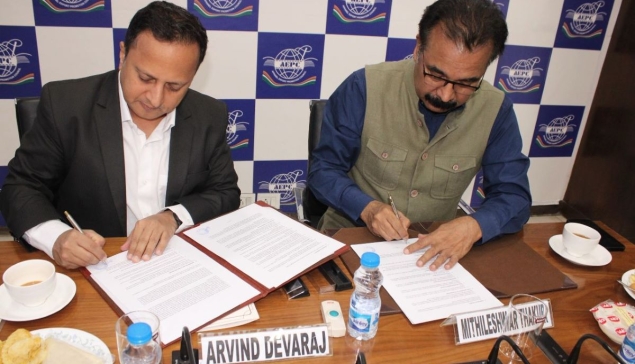


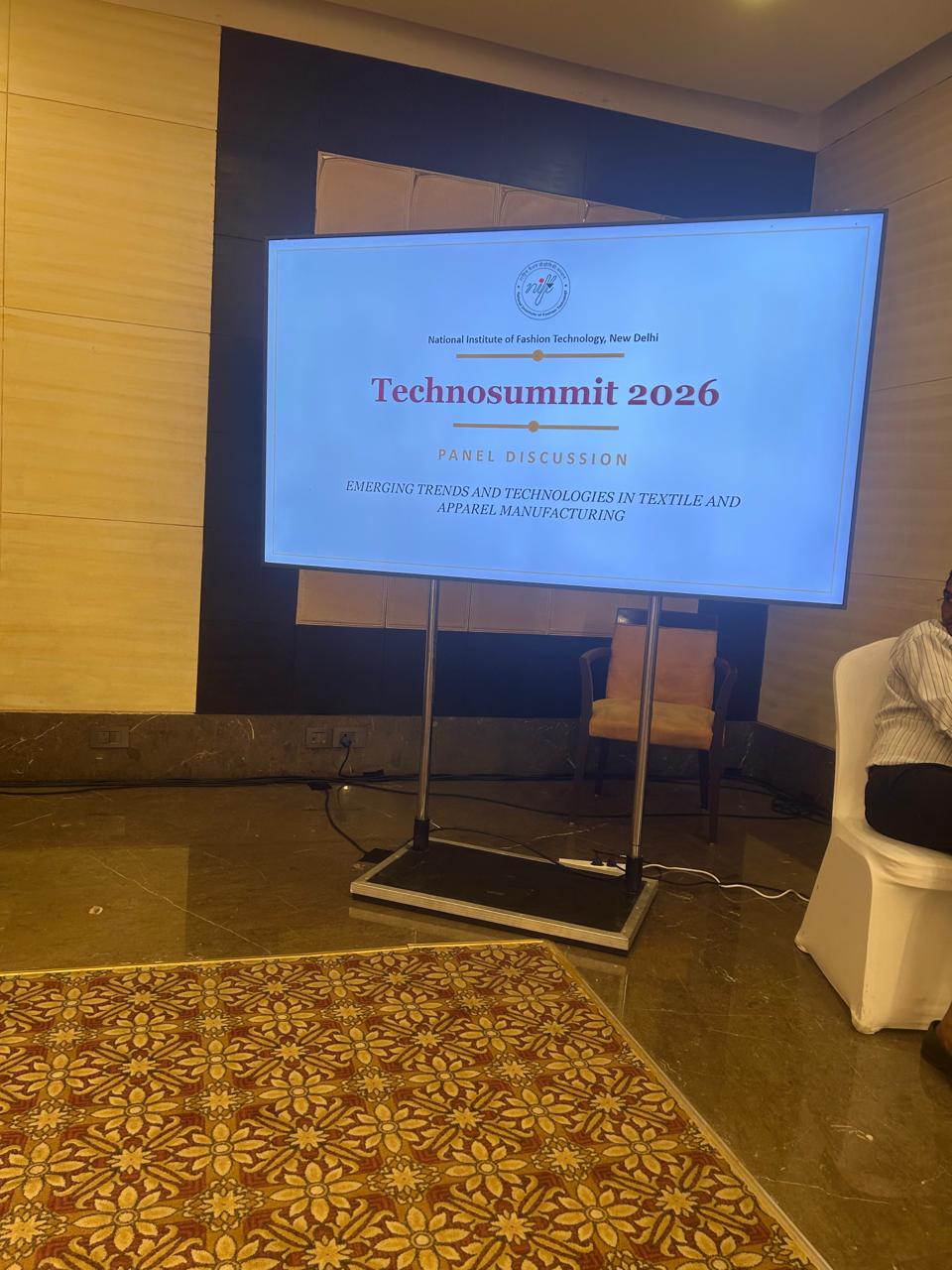
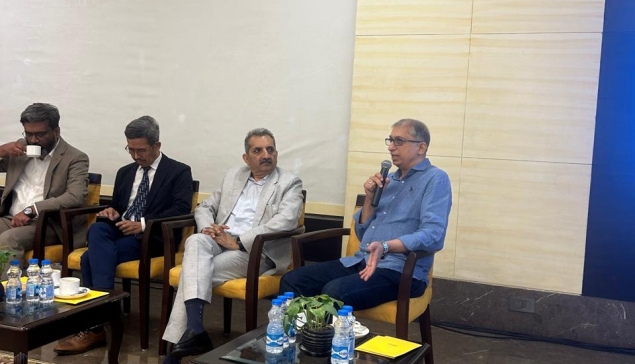
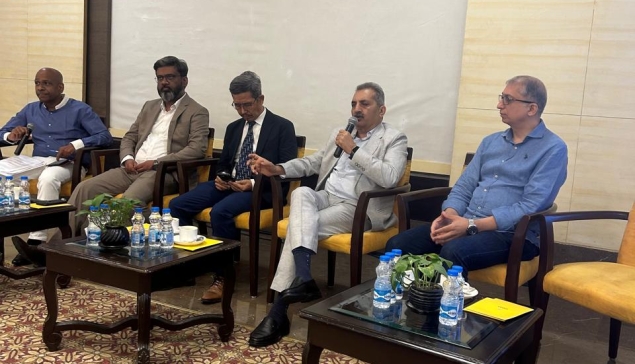
Panel Discussion: Panelists
Ashok Kumar – Sector Expert & Former Deputy Director General, Bureau of Energy Efficiency
Anuj George – Chief Business Officer, Solvei8
Sumit Sahni – Chief Operating Officer, Modelama Exports
Sanjay Sharma – President & COO, LNJ Bhilwara Group
CREDITS: The writeup is derived from NIFT Today's summit panel discussion. The content has not been edited and reviewed by us.
Sumit Sahni, Modelama Exports on RFID and Industry 4.0
“If I look back at my career, I started working on RFID as early as 2003. It is only over the last decade that people have begun talking about it more widely, but my journey with it began much earlier. I had the good fortune of meeting industry leaders who clearly saw this as the future and understood the importance of defining RFID technology in practical terms.
Everyone goes to a showroom, buys a product, scans it, and all the data is there. In the same way, if we are manufacturing a product and begin tracking every movement through RFID, then the entire process becomes visible. But this cannot be generic. Every company works with a different product and different processes, so each one has to create its own benchmark first.
As you asked about sustainability and whether an approach can be sustained, the point is that if we take a global standard — say, the best factory in China — and set our RFID scanning benchmarks accordingly, then we can begin tracking every milestone. In practice, RFID tracking starts from the gate itself. The moment a person walks in, the system should track that person for the next 4 to 8 hours, along with the raw material, holding time, and ageing time.
We already have the data, but the real issue is that nobody works on it consistently. Usually, someone at the top wakes up and asks for a report, and then the information is pulled up in a limited way. So yes, it is a continuous process, and whether one can sustain it or not depends on management commitment.
If you ask me personally, it is very successful because I drive it myself with passion. I also know many companies that are still struggling to implement it, even some smaller companies where management is not fully pushing it. But where the manager is more tech-savvy, the results are excellent. So it does work — often in silos — and there is no doubt about that.”
AI, MES, and the Shop Floor: Excerpts from Anuj George-Chief Business Officer at Solvei8 with expertise in digitising factories:
“Looking at the way AI has evolved over the last six to nine months, I would say none of these solutions are far-fetched anymore. Everything mentioned is possible in the next six to nine months.
The reason is simple. The most complicated work earlier was software coding and algorithm building, which required highly skilled engineering graduates. Today, in our own team of about 40 people, nearly 50% of the work is being done by an AI agent. We are not using humans to write code from scratch; we are using humans to understand the code and improve it. Productivity has gone up, and we are not hiring at the same pace.
The end goal we are looking at for the next six months has evolved significantly. Earlier, launching a product would take us a year. Now, the first phase of AI-based assisted planning and AI-based MTM or SMB calculation will be launched next month, and we have been able to build this in the last 45 to 60 days.
So AI-assisted planning and related tools are already very close to becoming reality. The only area that may still face challenges is computer vision in certain product categories, especially carpets, because what is a defect in one product could be a design element in another. For example, a flaw in a denim pant may actually be a design feature in another denim style.
Apart from that, I do not see major problems, provided the right data exists. As Mr. Sahanee said, if you have the right conditional data through systems like RFID or ERP, and if that data is cleaned properly, then AI can work effectively on top of it. Data quality is the foundation. The only intrinsic challenge may be around visual interpretation in design-sensitive products, and that is something we will have to watch more closely.”
Sustainability and Operating Impact: Excerpts from Dr Ashok Kumar, Sector Expert and Former Deputy Director General, Bureau of Energy Efficiency comments:
“On the sustainability side, we are using recycled PET, on-site renewables, and other measures to reduce power consumption and energy cost. We are also working on heat recovery and related efficiency measures. To answer your question directly, the operating benefit has come most clearly from on-site renewables. On the bottom line, we saw an immediate difference.
We also have off-site renewable arrangements, including a solar power plant in Vitanay and a wind power plant, and we are supplying energy to the Rajasthan board and to KIT. So the impact has been real and measurable.”
Carbon Credits and Regulatory Readiness
“On your question about carbon credit trading and compliance, it is a very relevant one. To inform the students and those entering the industry, let me say that the textile industry has been moving toward regulatory benchmarking for a long time. When the regulatory framework began to take shape around 2010–11, the government wanted to benchmark the textile industry.
At that time, many believed it would be difficult to benchmark the sector because textile businesses are very diverse. One company may be making one kind of product, another may be changing product shape or raw material based on market needs, and the sector itself includes spinning, weaving, processing, composites, and more.
But over time, we started developing common yardsticks. We separated apples from oranges as much as possible and brought in the best minds from industry to help shape the benchmarks. Today, many units are using the formats provided by the government to compare themselves against those benchmarks, and the textile industry has made significant progress.
The challenge now is that when you move into the MSME segment, you are dealing with organisations that are not highly regimented. They still operate in very traditional ways. Working capital is limited, knowledge is limited, and the ecosystem needed to support compliance is also not fully available.
At the same time, several government programmes are now helping them move forward. Even larger buyers are beginning to push requirements down the supply chain. If big brands or principals ask for water intensity, renewable intensity, or other sustainability parameters, then the pressure naturally flows to the smaller units as well. That is the direction in which the industry is moving.”


 CONTACT US
