



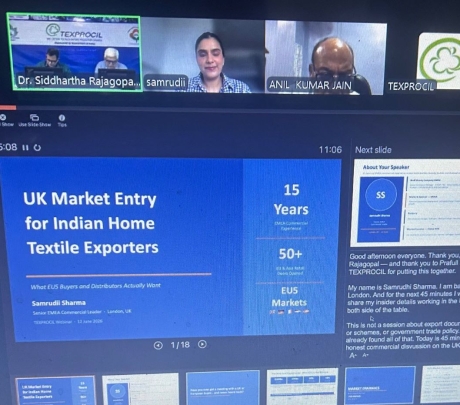
Key Speaker
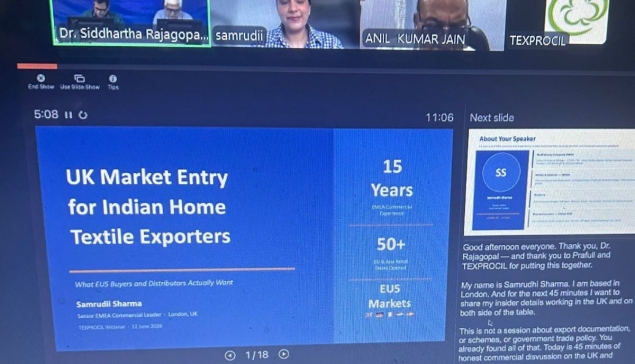
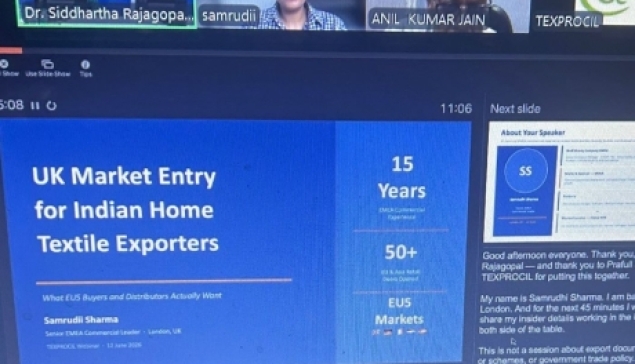
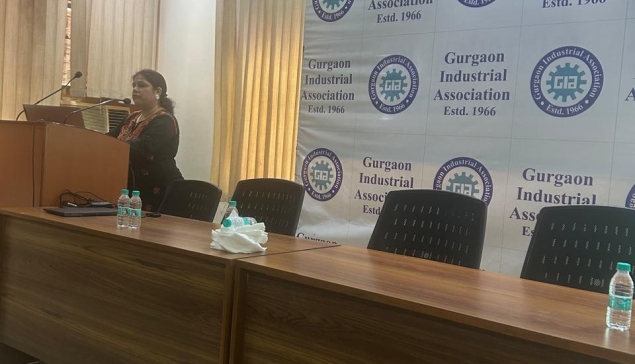
Ms. Samrudii Sharma, a senior EMEA (Europe, Middle East and Africa) commercial leader with over 15 years of experience managing retail and distribution partnerships across the United Kingdom, Germany, France, Italy, Spain, the Middle East, and North Africa delivered a very impressive presentation sharing actionable and measurable guides and insights. Very, very brief.
Session Proceeds
My name is Sampriti. As you mentioned, I'm based in London and for the next 45 minutes, I really want you to share my insider details which I have got from working in the UK and on both sides of the table.
Well, I want to be very, very clear about that. This is not a session about any export documentation or schemes or government trade policy because you have already (0:26) found that you're already aware and with the amazing team with the text puzzle. Today's 45 minute session is basically a very, very honest commercial discussion of the UK and the European (0:37) buyer side.
So let's start it. So I will be super brief here just to give you a little bit of a background because we are talking about the textiles. So I have been in the UK for about (0:52) like 15 years of managing the commercial partnership across all the European markets in home textile, fashion, beauty, and the licensed consumer products.
And I work commercially with (1:04) Marks and Spencer, Burberry, Mustard London, where I've personally opened 50 retail stores across Europe and Asia. And the good thing is that my career started in textile designing. I have done my bachelor's in textile designing.
So I'm very, very familiar with that vertical clearly, which means I understand this industry from both sides, from the factory floor to the buyer's office. (1:27) And what buyers absolutely look for when they hold a sample, what makes a manufacturer easy or difficult to work with commercially, everything that I'm going to share comes from being on those (1:36) rooms. So it's going to be very, very specific questions and a specific topic session today.
Well, before I start, I just wanted to ask you, I know there's going to be two types of manufacturing in this session. You probably be already working with the big brands already have a largest manufacturing, but just so they realized, have you ever got a meeting with the UK or the European buyer and then never heard back? Maybe you were at the trade show, maybe somebody had made an introduction, the meeting happened, it really went well. They look at your catalog and they say they've been touched and then nothing..
Well, before I get into the details, I want to acknowledge something very, very clearly that some of you have already supplied to Next, Marks & Spencer, Ralph Lauren in the US market. You know what joint business plan is and you know what sell through means. You understand all the certification, whether it's OEKO tech certification, CETEC certification.
So now the situation is that, that currently, if you have to look at the, look at the structural opportunity, which is presenting to us in 2027. (2:48) So CBI European market survey says about 169 billion, the European HDDT export market, out of which 78 billion from developing countries growing at 7.7% year on year. And you have to know that 60% of the home textiles sourced directly from the developing countries.And these countries hold about 46% of the European market share at the moment. The European market is already buying from India at a scale. The question is whether the demand exists and the question is why India isn't capturing more of it.
And the three things open simultaneously in 2026. Number one, as you all probably be aware, the US tariffs. One in four Indian textile exporter lost more than 50% of the US shipments in Q4 alone in 2025.
And the Europe is the, you know, by default, the pivot. And most of you know that. What most of you don't know is how to execute it correctly, especially in the UK and the European market.
With India and the UK FTAs live, (3:57) 23 billion UK textile import now market have effectively duty-free sitting for India. (4:05) For the first time, level playing field with Bangladesh, Turkey and China in the UK retail. (4:12) And the tariff barrier is gone, as Mr Raj Gopal also mentioned it.
Now look at the commercial barrier remains. That's what today we're going to address. Bangladesh, and I want precise here because it's very, very misunderstood.(4:26) Bangladesh didn't beat India in European home textile because their cotton is better. No, it isn't. They import almost all of it.
Bangladesh only one because of the two things. What (number one is duty-free LDC access, giving them a structural 12% pricing advantage over India (4:45) and in every European market. And the operational discipline, which I'll come back to later.
Now look at the duty advantage is now ending. Bangladesh graduates from LDC status in November 2026, which is happening just a few months away from today. The playing field is leveling for the (5:04) first time in a decade for India and the UK and the European buyers.
I can tell you from the (5:09) meetings that I have of every single week, they are positioned to be found and they want to find an alternative suppliers for them. Now, how buyers find you? So mostly what we have observed, (5:21) the trade show is 45%. Usually you tend to meet a lot of buyers in the trade show.(Buying agents is 30%. Digital platform is 20%. And the fifth thing is basically the cold email, (5:34) cold LinkedIn, you know, requests you send, you tend to send on all the buyers in the UK. But I can say the trade shows are still primary channel and nothing has replaced it. (5:45) Moving forward, now that we have discussed, there is an extra opportunities already available from the operational side, whether it's Bangladesh, Turkey, tax, tariff rebate and everything. Now look at the market dynamics.
And I want to be very, very precise here that opportunity is there, but the Europe is not one market like you tend to trade in the US market. It's very five different (6:10) commercial conversation that you're going to have when you try to trade in the Europe market. (6:14) The trading that we see is a most expensive mistake actually you can make.
They are very, (6:18) very different. The culture is different. The people you meet with, they are different. And especially some of the UK brands have not been able to launch in Germany. Some German brands (6:28) have not been able to launch in France. And there is a reason behind it.
How different are these (6:32) companies together? How they are all together, where they are close to each other. (6:38) So look at the specific market dynamics. And obviously, I'm going to share this slide with (6:42) everyone and with the experts that you see.
You can always go back and look at all the details. But here we are. Let's dive a little bit deeper into each market to provide, to give you some sort of a very top line concept context.
So UK, for example, currently sitting at 7.75 billion. (The key retailers hard here is John Lewis, Durham, Parkinson's, that's the next high mark. Twice yearly buying cycles.
The UK buys twice a year. And usually they need time in six to five months. The only key watch out is that post Brexit, UK rules differ from the EU.
Do not assume the EU certifications covers UK. It doesn't. For example, Germany, the second largest market in the European Union, is 22% of the share across all European markets.
So UK is 25 and Germany is 22. Very, very close to each other. But both are the biggest market in the Europe existing right now.
They usually plan 12 months ahead. Most of their planning of the buying only happens annually. So they don't buy six to seasonal wise.
They buy annually. Most of the rigorous quality testing is actually in the EU five, which happens in Germany. Always expect three to six months of sample approval.
Prepare for a lot of rejection in the first sample. It's the standard process, not a rejection issue. Just to give you, I'm not going (8:09) to spend too much time in this particular topic because these are all a lot of details.
Obviously, you can get through it. I'll share the deck with everyone. But in order to look at the rest of the market.
Note: I noticed there's a discrepancy in the transcript—the introduction mentions "Ms. Samrudii Sharma" but the speaker says "My name is Sampriti." The transcript appears to preserve the speaker's actual words (Sampriti), while the introduction may have contain an error in the name.
Make a composite write up with factual expression
Composite Write-Up: Factual Presentation Summary on UK & European Textile Market Opportunities for India
Ms. Sampriti (also referenced as Samrudii Sharma), a senior EMEA commercial leader with over 15 years of experience managing retail and distribution partnerships across the United Kingdom, Germany, France, Italy, Spain, the Middle East, and North Africa, delivered an actionable and measurable presentation on UK and European buyer-side commercial dynamics for textile exporters.
Speaker Background
Based in London, Sampriti has 15 years of experience managing commercial partnerships across European markets in home textiles, fashion, beauty, and licensed consumer products. She holds a bachelor's degree in textile designing and has worked commercially with Marks & Spencer, Burberry, and Mustard London, personally opening 50 retail stores across Europe and Asia. Her career started in textile designing, giving her industry understanding from "factory floor to buyer's office."
Session Focus
The 45-minute session was explicitly framed as an honest commercial discussion of UK and European buyer-side dynamics—not about export documentation, schemes, or government trade policy. The focus was on what buyers look for when holding samples and what makes manufacturers easy or difficult to work with commercially.
Market Opportunity Data
According to the CBI European market survey:
European home textile, fashion, and beauty (HDDT) export market: $169 billion
From developing countries: $78 billion, growing at 7.7% year-on-year
60% of home textiles sourced directly from developing countries
Developing countries hold 46% of European market share
Current India-UK Position
India accounts for approximately 6.6% of UK's overall textile and apparel imports
Export value: approximately $2.16–$2.4 billion annually
With India-UK FTA live, the $23 billion UK textile import market now offers effectively duty-free access for India
First-time level playing field with Bangladesh, Turkey, and China in UK retail
Critical Market Shifts (2026–2027)
Factor Impact
US Tariffs 1 in 4 Indian textile exporters lost >50% of US shipments in Q4 2025 alone
Europe as Pivot Europe becomes default alternative market
Bangladesh LDC Status Graduates from LDC status in November 2026, ending 12% structural pricing advantage
FTA Tariff Elimination 8–12% tariffs phased out; ~99% duty-free access for Indian garments, home textiles, denim, synthetics, RMG
Why Bangladesh Previously Outperformed India
Bangladesh's advantage was NOT better cotton (they import almost all cotton). Two factors drove their success:
Duty-free LDC access: 12% pricing advantage over India in every European market
Operational discipline
With Bangladesh's LDC graduation in November 2026, the playing field levels for India for the first time in a decade.
How Buyers Find Suppliers
Channel Percentage
Trade shows 45% (primary channel)
Buying agents 30%
Digital platforms 20%
Cold email/LinkedIn 5%
Trade shows remain the primary channel; nothing has replaced them.
Market Dynamics: Europe Is Not One Market
Europe comprises five different commercial conversations, not a unified market like the US:
Cultures differ
People differ
UK brands have failed to launch in Germany; German brands have failed to launch in France
Specific Market Details
Market Size/Share Buying Cycle Planning Horizon Key Notes
UK $7.75 billion (25% share) Twice yearly 5–6 months lead time Post-Brexit: UK rules differ from EU; EU certifications don't cover UK
Germany 22% share (2nd largest) Annually 12 months ahead Rigorous quality testing in EU 5 (Germany); 3–6 months sample approval; first-sample rejection is standard process
Key Retailers
UK: John Lewis, Dunelm, Parkers, Next, Marks & Spencer
US: Ralph Lauren
Certifications Required
OEKO-TEX certification
CETEC certification
Common Exporter Challenge
Many manufacturers experience: meeting with UK/European buyers at trade shows or through introductions → meeting goes well → buyer reviews catalog → buyer says "touched" → then nothing. The session addressed how to execute correctly and avoid this outcome.
Projected Growth Outlook
India-UK textile trade expected to double by 2030 under FTA
Market share could climb from 6% to 10% or more
Exports projected to reach ~$2.4 billion by 2027–2030
Woven apparel export value projected to reach ~$1.6 billion by 2027
Margin improvements: 8–12%, especially for SMEs
Competitive tariff advantage over China: ~12% in key segments.
Key Beneficiary Regions
Tiruppur (knitwear)
Delhi-NCR (wovens)
Surat (home textiles)
The presentation concluded that while the tariff barrier is gone, the commercial barrier remains—and that is what manufacturers must address to capture the structural opportunity presenting in 2027.
CREDITS: Content recorded by Salil Chawla, Director, DFU Publication, in his capacity as a delegate/participant. The content has not been edited and reviewed by us.


 CONTACT US
