







_large.jpg)


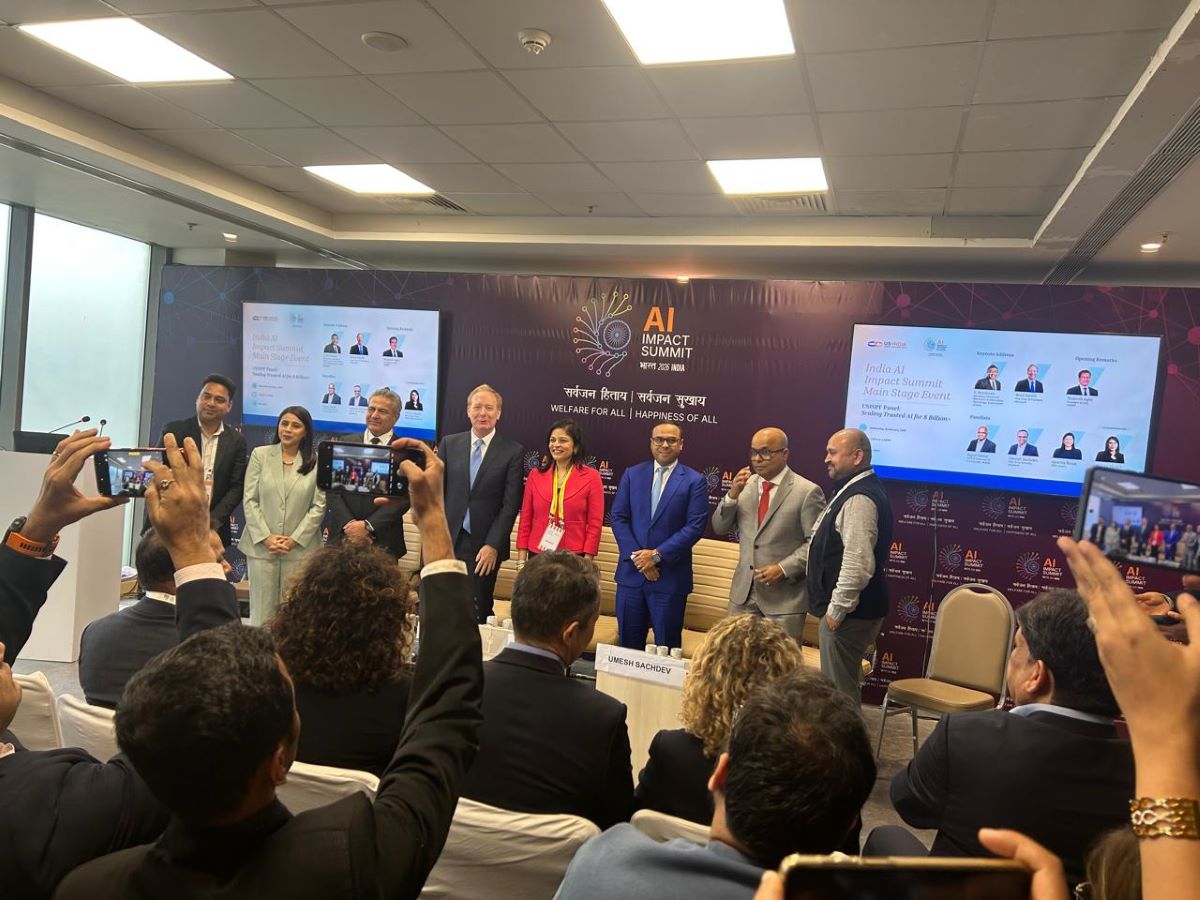
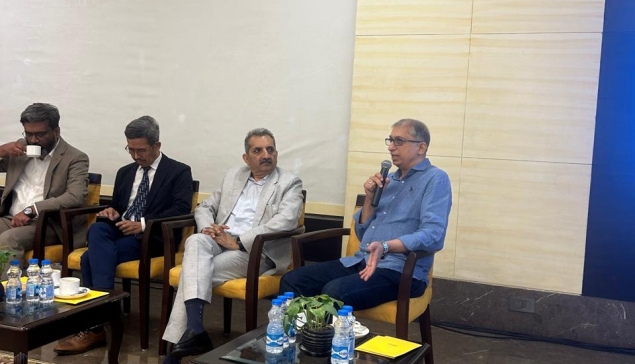
India AI Impact Summit Main Stage Event-USISPF Panel: Scaling Trusted AI for 8 billion +
Trust, Access, and the Future of AI: A Conversation That Matters
The stakes could not be higher. Trust without access is meaningless.
The next billion innovators may not emerge from Silicon Valley or Bengaluru’s tech corridors. They may come from smaller towns, classrooms, farms, or startups we have not yet imagined. Innovation does not belong to a geography—it belongs to opportunity.
It was in this spirit that the session opened, setting the context for a critical conversation on trusted and inclusive artificial intelligence.
To frame this dialogue, Dr. Mukesh Aghi—President and CEO of the U.S.-India Strategic Partnership Forum—was invited to set the stage. With over two decades of global leadership experience, a recipient of the JRD Tata Leadership Award and the Pravasi Bharatiya Samman, Dr. Aghi is widely respected for advising Fortune 500 CEOs and shaping U.S.–India strategic relations.
Dr. Aghi underscored a reality we no longer need to debate: AI will be pervasive. It will touch every dimension of life—education, healthcare, transportation, commerce, and governance. The real question is not whether AI will shape our future, but how. Will AI deepen inequality by concentrating power among a few, or will it percolate downward to create a more equitable global system?
If this moment is mishandled, he warned, we risk creating a new digital feudalism—where control of AI defines privilege. The urgency, therefore, is to ensure that trusted AI reaches not just millions, but hundreds of millions.
The keynote address was delivered by Brad Smith, Vice Chair and President of Microsoft. Having joined Microsoft in 1993, Smith leads a global team across 54 countries and operations in over 120 nations. Described by The New York Times as a de facto ambassador for the technology industry, he is widely regarded as one of its most influential voices.
Smith did not shy away from the hard truth: AI may either close global divides or dangerously widen them. The greatest divide today, he argued, lies between the Global North and the Global South—a divide historically created by unequal access to transformative technologies such as electricity. AI now stands at a similar inflection point.
Generative AI, he noted, is still in its infancy, having entered the public domain only with the release of ChatGPT just over three years ago. Early adoption trends, however, are uneven and concerning. Without deliberate intervention, AI risks reinforcing existing economic disparities rather than correcting them.
The path forward begins with infrastructure: data centers, connectivity, and reliable power. Smith referenced Microsoft’s commitment—reinforced by Satya Nadella—to invest over $7 billion in India, and a broader plan to deploy nearly $50 billion across the Global South by the end of the decade. But infrastructure alone is not enough.
Skills are the true catalyst. History shows that every transformative technology succeeds only when skills are widely distributed. Just as computer science enabled India’s software revolution, AI skills must now reach scale. Microsoft’s initiatives to train millions of individuals and educators aim to ensure that AI capability becomes a societal asset, not a gated privilege.
Yet trust cannot be engineered by infrastructure and skills alone. Smith outlined three essential pillars to earning global trust:
First, AI must work across languages—not just English. Multilingual capability is foundational to inclusion, demanding investment in diverse datasets, tools, and local content.


 CONTACT US
