





_large.jpg)


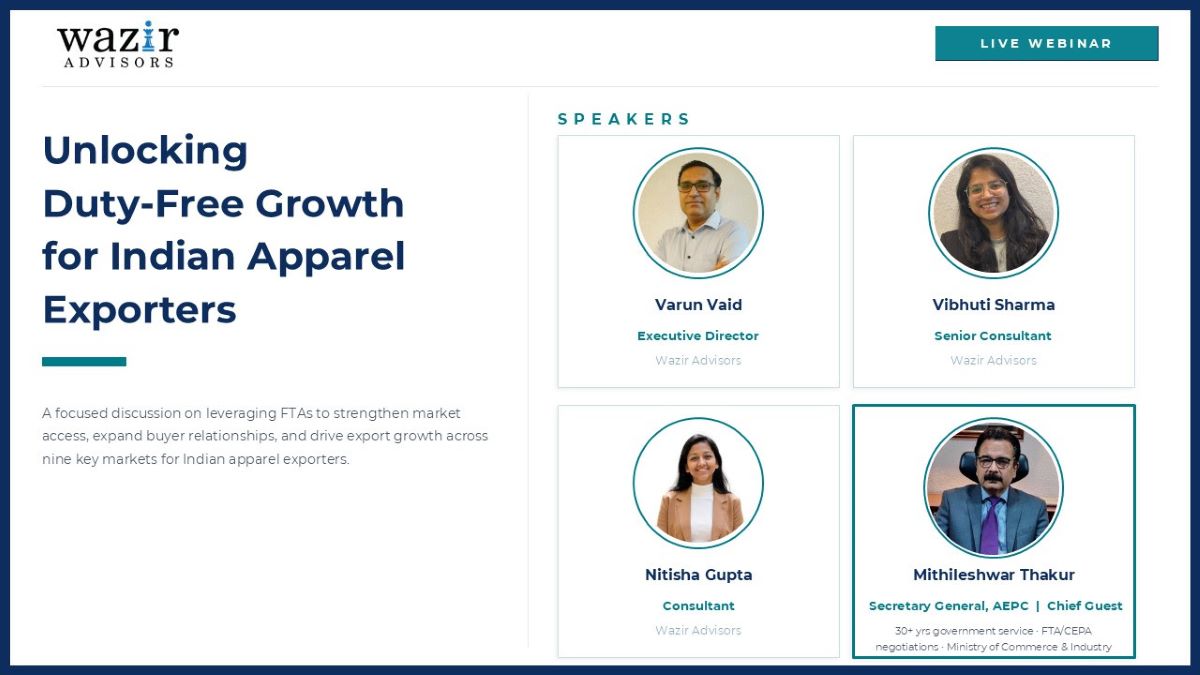
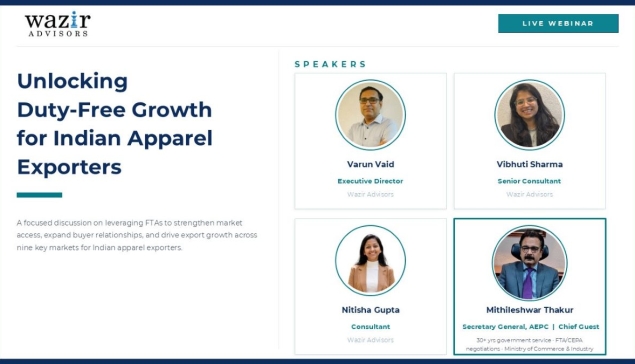
India’s apparel industry stands at a pivotal juncture as Free Trade Agreements (FTAs) reshape global sourcing dynamics. With nine preferential markets offering a combined import opportunity of $177 billion, Indian exporters currently capture only 5%—a modest $8.8 billion—leaving immense headroom for growth. The EU and UK alone account for 65% of this opportunity, underscoring their strategic importance.
India’s strongest footholds lie in the Gulf, with the UAE and Oman commanding shares of 22% and 15.4% respectively. Yet, growth in these markets is slowing, while East Asia—Japan and South Korea—remains largely untapped at under 1.2% share despite long‑standing CEPA access. The EU, with its $94 billion apparel import market, represents the biggest prize: every 1% share gain translates into nearly $940 million in incremental exports.
Competition is intense. China dominates eight of nine markets, leveraging scale and synthetic capabilities, while Bangladesh thrives in cotton basics with duty advantages. Viet Nam and Cambodia are rising challengers, particularly in East Asia. For India, FTAs narrow tariff gaps, but true competitiveness will depend on supply chain integration, MMF strength, compliance readiness, and buyer confidence.
The Wazir MAPS framework highlights prioritization: Tier 1 markets such as the EU, UK, and Australia demand direct buyer engagement, while Tier 2 and 3 markets require institutional partnerships. India’s cotton stronghold—categories like woven shirts, dresses, and babywear where shares range from 6% to 46%—offers immediate leverage.
Three tailwinds converge with India’s FTA window: global sourcing diversification under “China+1,” Turkey’s declining share in cotton categories, and Bangladesh’s impending LDC graduation in November 2026. Together, they reset the competitive field in India’s favor.
The next 12–24 months are transformative. Exporters who invest now in Rules of Origin compliance, sustainability certifications, and buyer relationships will be best positioned to unlock duty‑free growth across these nine markets.
CREDITS: PR recieved from Wazir AI Team <


 CONTACT US
