Textile Sector PLI Scheme – Framework, Benefits & Insights
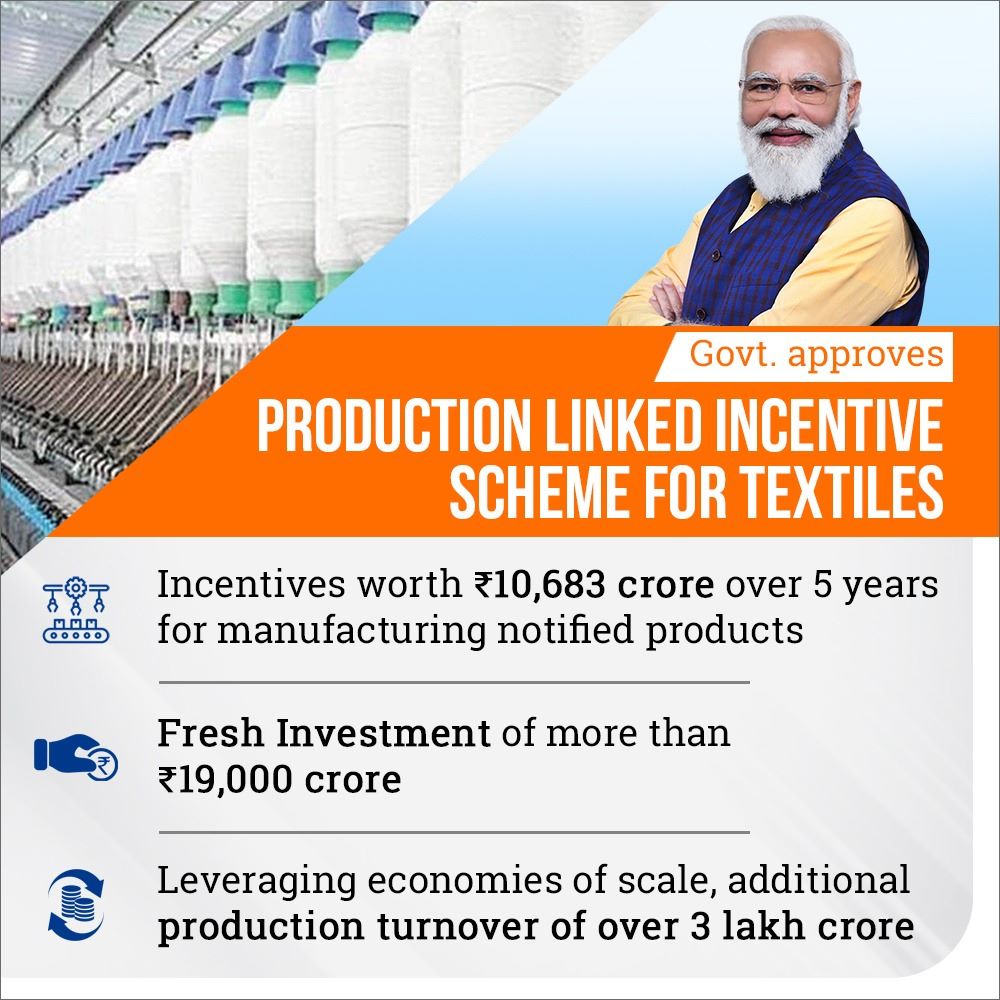
India's Production Linked Incentive (PLI) Scheme for Textiles, with ₹10,683 crore outlay, targets man-made fibre (MMF) apparel, fabrics, and technical textiles to diversify beyond cotton dominance. Launched in 2021 with 64 approved projects, the application window reopens until December 31, 2025. Eligible categories span 47 MMF garment HS codes (woven/knitted fashion, activewear, lingerie), 14 fabric types (polyester, nylon, viscose), and 10 technical segments like geotextiles, medical textiles, and smart textiles.
Two investment tiers offer incentives: Part 1 requires ₹150 crore investment for ₹300 crore turnover (15% initial, 14% incremental sales); Part 2 needs ₹50 crore for ₹100 crore turnover (11% initial, 10% incremental).
Examples show 20-31% returns on investment over gestation periods through FY2029. Focus remains on new machinery, direct manufacturing (60% value addition minimum), and notified HS products with GST compliance.
Key requirements include separate project units, financial proofs, and Detailed Project Reports. Wazir Advisors provides end-to-end support—from category selection and DPR preparation to claim filing—leveraging their textile expertise across global projects. Indian exporters can seize this for sustainable scaling amid global shifts like US tariff pauses and recycled yarn demand.
CREDITS: The content has been derived from the PDF file received from CITI India official mail id. The text has not been edited and reviewed by us.


 CONTACT US
