










_large.jpg)



Global Textile Sector: Uncertainty Is New Certainty
War times: Everything goes for toss
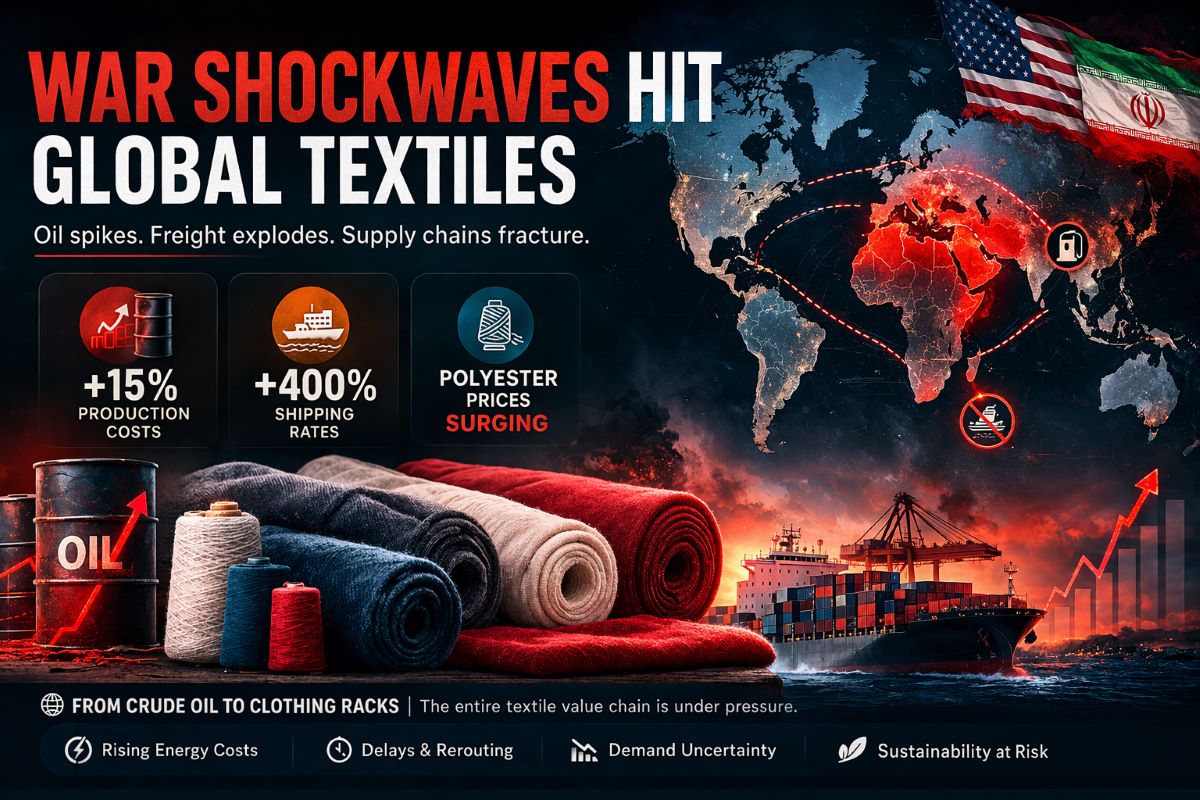
The ongoing Iran–U.S.–Israel conflict is sending deep disruptions across the global textile and apparel sector (T&A), with considerable rising costs, supply chain bottlenecks/stoked uncertainty, and trade unpredictability emerging as core challenges, according to multiple Reuters reports covered in the following report.
Supply Chain Disruptions Stall Apparel Movement
One of the most immediate impacts has been on logistics. With Middle Eastern airspace closures and flight cancellations, garment shipments from South Asia—particularly India, Bangladesh, and Pakistan—have been severely delayed. Major global retailers are facing inventory pile-ups as cargo routes remain disrupted. citation: Reuters
The region’s heavy dependence on Gulf-based airlines for textile exports has exposed a critical vulnerability, slowing delivery cycles for fast-fashion supply chains.
Energy Shock Driving Input Cost Surge
A sharp rise in crude oil prices—crossing $100 per barrel amid the conflict—has significantly increased production costs for textile manufacturers. Citation: Reuters
Since textiles rely heavily on petroleum derivatives (such as polyester, nylon, and packaging materials), this has led to a spike in raw material prices. Reuters notes that the war is “driving up energy prices” and squeezing supplies of critical inputs globally. Citation: Reuters
In India, the ripple effect is already visible, with chemical and textile units facing rising input costs and margin pressure. Citation: TimesofIndia (ToI)
Packaging and Synthetic Materials See Price Surge
The cost escalation extends beyond fibres. Polybag prices—widely used in garment packaging—have surged by nearly 80% due to higher naphtha-linked raw material costs tied to the conflict. Citation: ToI
This sharp volatility is forcing manufacturers to delay or renegotiate orders, adding uncertainty to export commitments.
Trade Routes and Shipping at Risk
The potential disruption of critical maritime routes such as the Strait of Hormuz has raised alarms across industries. Any sustained blockage could choke global supply chains, delay shipments, and inflate freight costs—factors crucial to textile trade competitiveness. Citation: Thomson Reuters
Demand-Side Pressures Emerging
Beyond supply, the conflict is also impacting global demand. Rising inflation—fuelled by higher energy costs—is reducing consumer spending power, especially in key markets like the U.S. Citation: Reuters
For the textile and fashion industry (T&F), this could translate into softer demand, delayed orders, and inventory overhang which is playing out.
A Sector Reeling Under Supply Shock: Roils Global Trade Sentiment
Summarising this cannot come at a worse time given that the textile industry—already navigating sustainability transitions (Case in point ’EU sustainability standards and regulations start to kickin in the near future’) and demand fluctuations/ demand postponement if the war rages for longer triggering upside inflationary pressures—is now posed with a renewed geopolitical shock.
From heightened imminent spike in input costs and logistics disruptions/ insurance premium dynamics to softening global demand, the Iran–U.S.–Israel war is threatening to reshaping/recaliberate the sector’s near/mid-term outlook.
Global outlook; Should the conflict protracts, trade experts warn of serious structural impacts/ rebalancing of trade supply dynamics, including potentially supply chain realignment, rising production costs, and fuelling unprecedented volatility in global textile trade.
Fingers crossed! God bless us all.
Credits: This article is an automated generated document by the Internet with due citations whenever applicable. The content has been “edited in parts” by us.



 CONTACT US
