Highlighting the immense potential of India’s Creative Economy and the crucial role of strategic skilling in shaping a vibrant, innovative future. Leveraging our rich cultural heritage and creative potential is essential for driving sustainable economic growth and global leadership.
Refer
As per UNESCO estimates, Cultural and Creative Industries generate over USD 2.25 trillion in global revenues and provide more than 30 million jobs worldwide.In India, Creative Industries are estimated at over USD 30 billion, contributing between 2 to 7 percent of GDP, depending on what we define as Creative Industries, and generating about 8 percent of employment among working professionals.
KNOW MORE
India’s consumer spending driven by Creative Industries is already over USD 350 billion, and it is expected to cross USD 1 trillion by 2030.
The economic multiplier effect is huge: every USD 1 invested creates USD 2.5 in wealth.
John Hawkins, who coined the term “Creative Economy” in his 2001 book, linked R&D, cultural products, arts, and other creative endeavors.Post-pandemic, the Creative Economy has gained fresh momentum with creators and content creators making major impacts on social media. William Dalrymple, in his book The Golden Road (Bloomsbury 2024), quotes a Chinese monk from the early 7th century CE:
"People of distant places with diverse customs generally designate the land they most admire as India." (Xuanzang).
Dalrymple goes on to say:
"From about 250 BCE to 1200 CE, India was a confident exporter of its own diverse civilization, creating a tangible 'Indosphere' where its cultural influence was predominant."
During this period, much of Asia eagerly received Indian soft power in art, music, dance, textiles, technology, astronomy, mathematics, medicine, mythology, language, literature, and religion. Unfortunately, today, culture has come to be largely equated with religion alone.
Join our community
Dalrymple asserts:
"This India or Bharat was one of the two great intellectual and philosophical superpowers of Ancient Asia, fully equal to China in the ancient world. It set the template for much of the world’s thinking and expression, significantly altering human history. For over a thousand years, it was a garden that issued seeds which blossomed elsewhere in rich, unexpected ways."
So why have our policymakers forgotten to nurture and develop a Creative Economy? Instead, we have become reactive to Western dictates. Has 200 years of ruptured history and subjugation left us confused?
From the first Education Policy in 1968 to the recent NEP 2020, education policy has never given due importance to our cultural manifestations—art, crafts, and other creative endeavors.
A National Crafts University was never established, though national institutions have emerged.
Even NEP 2020, introduced by a government that swears by India’s heritage, had no members from design or crafts on its committee. Its recommendations on harnessing creative prowess to catalyze the creative economy are superficial at best.
Back in 2007, I formulated India’s first National Design Policy, approved by the Government of India. This led to four additional NIDs and now over 300 universities and 3,000 colleges offering design courses.
Kerala’s Design Policy—perhaps mistakenly called so—has very little impact on shaping a Creative Economy. The outgoing Director of NID told me the policy group was hijacked by city-based engineers and the tourism department. He noted that 20-25 percent of all NID applicants are from Kerala.
Later, at the NID Amravati convocation, I learned that more than 50 percent of students there come from Maharashtra and Kerala.
Last year, YouTube paid out around ₹25,000 crore to Indian creators, according to India Today.
Creators across social media generated an astounding ₹85,000 crore in income. India Today recently celebrated Indian creators by featuring them on its cover.
ALSO REFER
To note:
Calicut was designated a UNESCO Creative City for Literature in 2023.
Kochi has applied for 2025.
Lucknow and Kohima earned designations for Gastronomy and Music, respectively.
I argued Thiruvananthapuram can receive the Intangible Cultural Heritage tag from UNESCO, World Crafts City status from the World Crafts Council, and World Design City recognition from WDO.
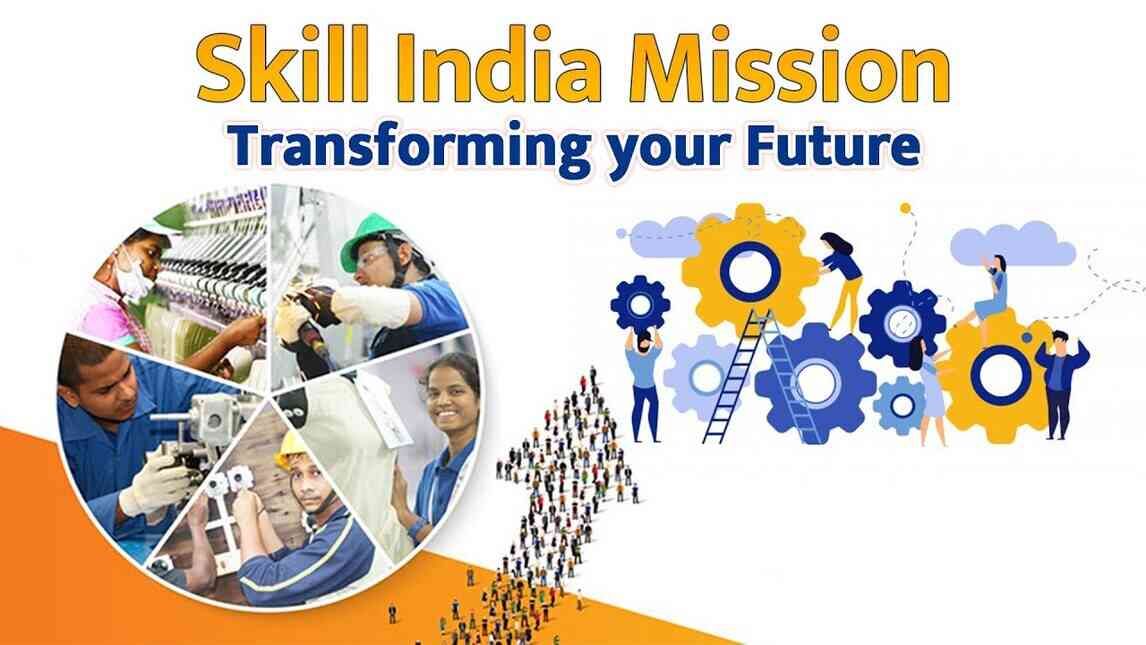
The first National Skill Development Policy was announced in 2009 by the UPA government. With an outlay of ₹275 crore through AEPC in the apparel sector, I had the privilege to train around 300,000 candidates across 235 directly run centres from 2009 to 2018 under ISDS!
The 2015 policy and Skill Mission, now under revision in 2025, again missed the opportunity to harness the Creative Economy, focusing instead on supply-demand-driven skilling.
Innovation-driven, Creative Economy-oriented skill development was absent. Yet, I must compliment the former NCVET chairman for advocating courses in performing arts, crafts, and similar fields.
WATCH
Today’s post-pandemic world and evolving geopolitical and economic realities underline the urgent need for India to thrust forward on the CREATIVE ECONOMY!
A friend once said that if you ask an AI what it can’t replace, it might say: “Culture and human creativity.” This truth should shape the future of skilling — not just equipping our youth for jobs, but empowering them to imagine, innovate, and create.
Kerala, with its deep cultural roots and human development legacy, stands uniquely poised to lead this new creative revolution. The Skill Kerala Global Summit 2025 proved that the state can transform its strengths in education and inclusivity into engines of creative growth, generating over 1.28 lakh new jobs and positioning Kerala as a global talent hub. Through events like Beyond Tomorrow 2025 in Kozhikode, the focus has turned towards nurturing creativity in design, content creation, media, crafts, and cultural innovation.
Fashion Guru
At the national level, the Government of India’s $1 billion Creative Economy Fund and the launch of the Indian Institute of Creative Technology (IICT) in Mumbai, backed by ₹400 crore, mark a milestone in developing creative and digital industries under the IIT–IIM model.
This commitment aligns with Kerala’s own initiatives, such as the Creative Corners being set up in schools—a visionary idea that must not fade into ritual. These spaces should be living labs where ideas breathe, not locked rooms of forgotten intention.
The larger challenge is to reimagine skilling itself—not as an exercise in conformity, but as a process of cultivating T-shaped individuals: specialists in one domain, but broadly creative across many.
Skilling should ignite imagination, promote “Right is Might” thinking, and integrate arts, design, and entrepreneurship alongside STEM.
Encouragingly, Kerala is showing results. The Wheebox–CII India Skills Report 2025 ranks Kerala 5th in employability with a 71 percent score, highlighting its inclusive and tech-savvy talent base. This surge in design aspirants, storytellers, and innovators signals that our youth don’t merely seek employment—they seek expression.
Can Kerala become the fountainhead of Creative India? Given its human capital, digital literacy, and global mindset, it certainly can—if skilling becomes the bridge between creativity and opportunity.
Related
Suggest a concise skilling-focused speech version for the event
Propose a 250-word op-ed on Kerala as Creative India’s hub
Draft a policy brief linking IICT funds to T-shaped training
Create a school implementation checklist for Creative Corners
Outline a course curriculum for creative-entrepreneurial skills
CREDITS: The contribution has been provided by Dr. Darlie Oommen Koshy, PhD (IIT Delhi), and has not been edited or reviewed by our team.


 CONTACT US
