














_large.jpg)



Hemp Fibers Reinforce the Future of Sustainable Composites
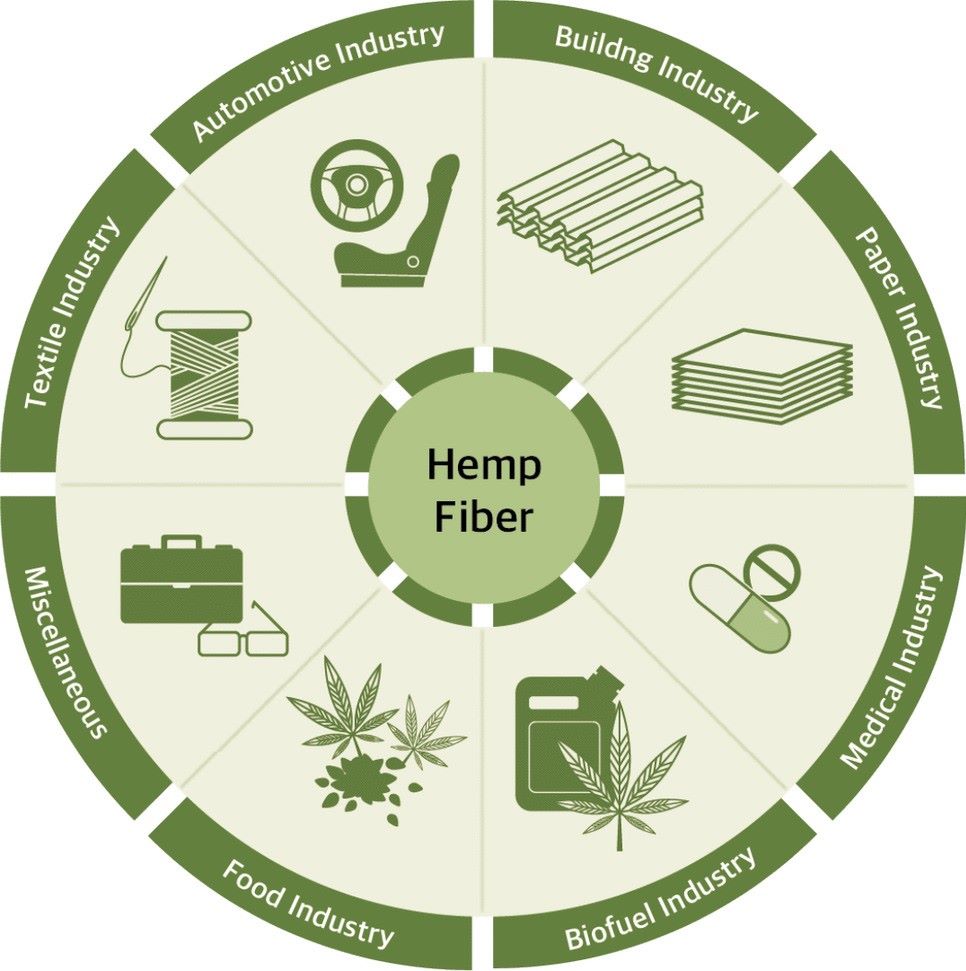
Hemp fibers are increasingly used as sustainable, high-strength reinforcements in composite materials, offering a biodegradable and lightweight alternative to synthetic fibers like glass or carbon. Derived from the plant stem, these fibers enhance the tensile strength and elastic modulus of thermoset and thermoplastic matrices. They are commonly applied in automotive, construction, and packaging industries.
Know More
Key Aspects of Hemp Composites
Performance: Hemp fibers provide high stiffness and strength comparable to conventional synthetic fibers. Incorporating hemp can increase the elastic modulus of composites by up to threefold.
Applications: Commonly used in automotive door panels, dashboards,, and vehicle parts, as well as in construction materials.
Sustainability: As a fast-growing, renewable crop, hemp acts as an eco-friendly filler.
Challenges: Key drawbacks include high moisture absorption (hydrophilicity) and poor interfacial bonding with certain polymer matrices, requiring chemical surface treatments (e.g., alkali treatment) to improve adhesion and performance.
Join our group
Matrix Compatibility: Hemp is compatible with various thermoset and thermoplastic matrices, such as polylactic acid (PLA), polypropylene (PP), and recycled HDPE.
The adoption of hemp in composites helps reduce waste, providing a lower-density, sustainable alternative for industrial applications.
CREDITS: Text taken directly from Textile Association Delhi Technical Textiles committee official WhatsApp chat. The content has not been edited and reviewed by us.



 CONTACT US
