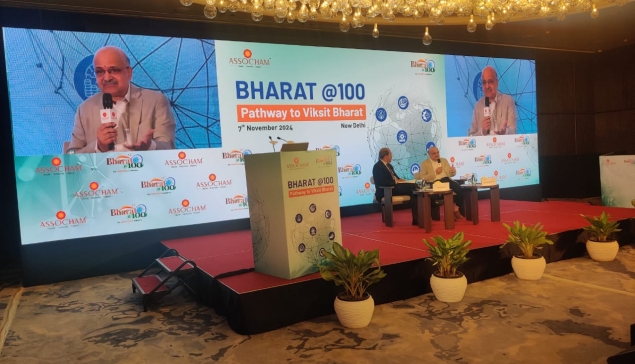
In a candid interaction with DFU Publications’ Editor-in-Chief Sanjay Chawla and Director Salil Chawla, Parvinder Singh of AADI Sustainability Solutions shared valuable insights on the evolution of textile waste recycling in India and its connection with global supply chains.
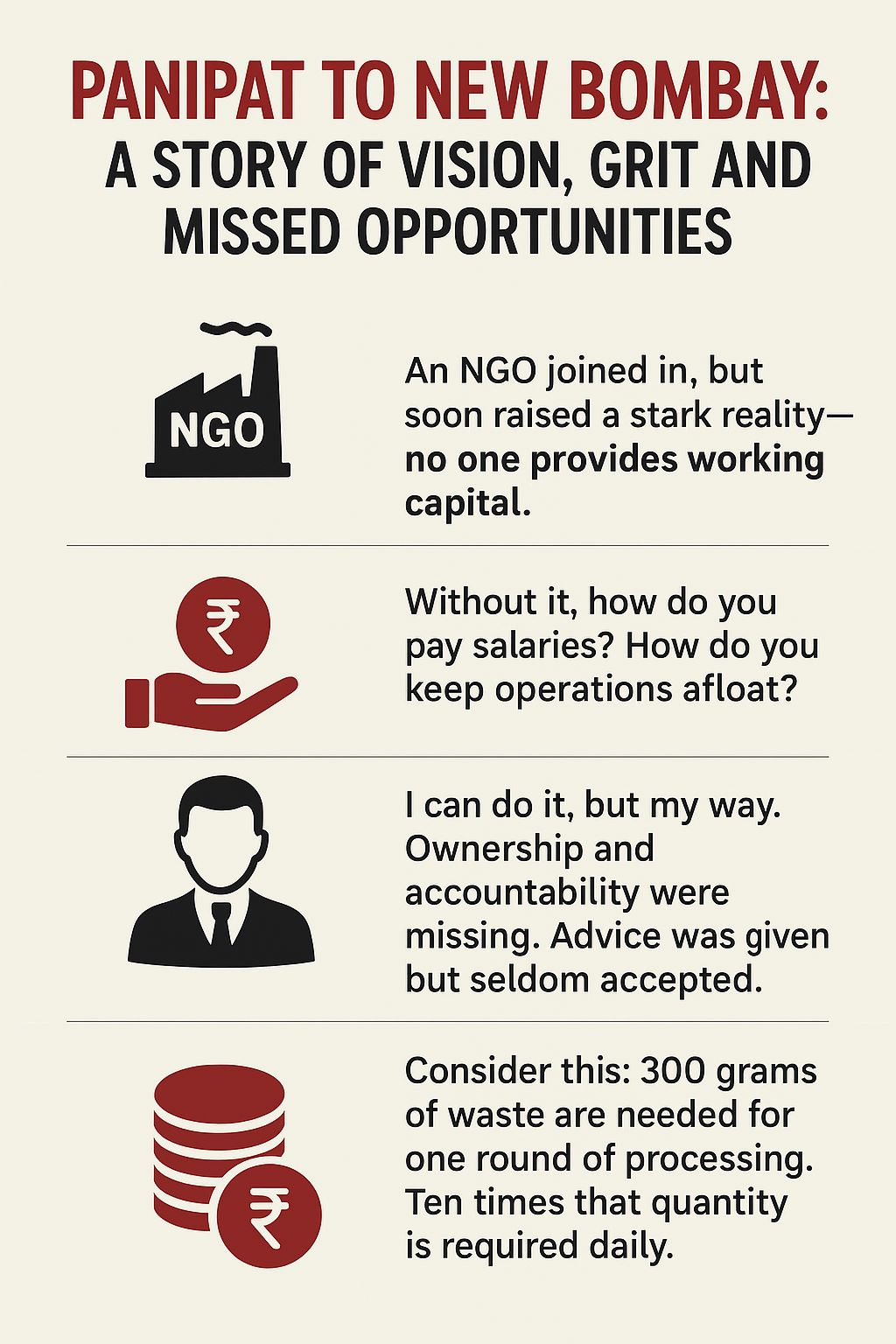
An investment was made in New Bombay with the hope of creating impact. An NGO joined in, but soon raised a stark reality—no one provides working capital. Without it, how do you pay salaries? How do you keep operations afloat?
Many players hesitate because running the show means chasing profitability, and profitability demands courage, clarity, and commitment.
Meetings were held, promises were made. “I’ll handle it,” one said. My response was clear: I can do it, but my way. Ownership and accountability were missing. Advice was given but seldom accepted.
Consider this: 300 grams of waste are needed for one round of processing. Ten times that quantity is required daily. Waste is available across Mumbai, Ludhiana, Tirupur, Panipat—but funds of at least ₹2–5 crores are essential. Nobody invests ₹50 crores without a profit roadmap.
Why the obsession with large teams and high salaries when entrepreneurs like me built enterprises single-handedly? The problem isn’t money—it’s intent.
Too often, projects fail because the purpose is unclear, like fields left unplowed before sowing seeds.
Look at Tripura, Ludhiana, Panipat. Industries there grew despite political apathy and lack of support. Entrepreneurs invested personal funds, stayed independent, and built enterprises brick by brick.
Today, agencies and brands want to associate their names with these successes, but the real groundwork was laid years ago by local visionaries.
True impact isn’t born from paperwork or branding exercises. It emerges when enterprises become profitable with courage, vision, and collaboration built on merit—not empty promises. Until then, the talk of development remains just that—talk.


 CONTACT US
