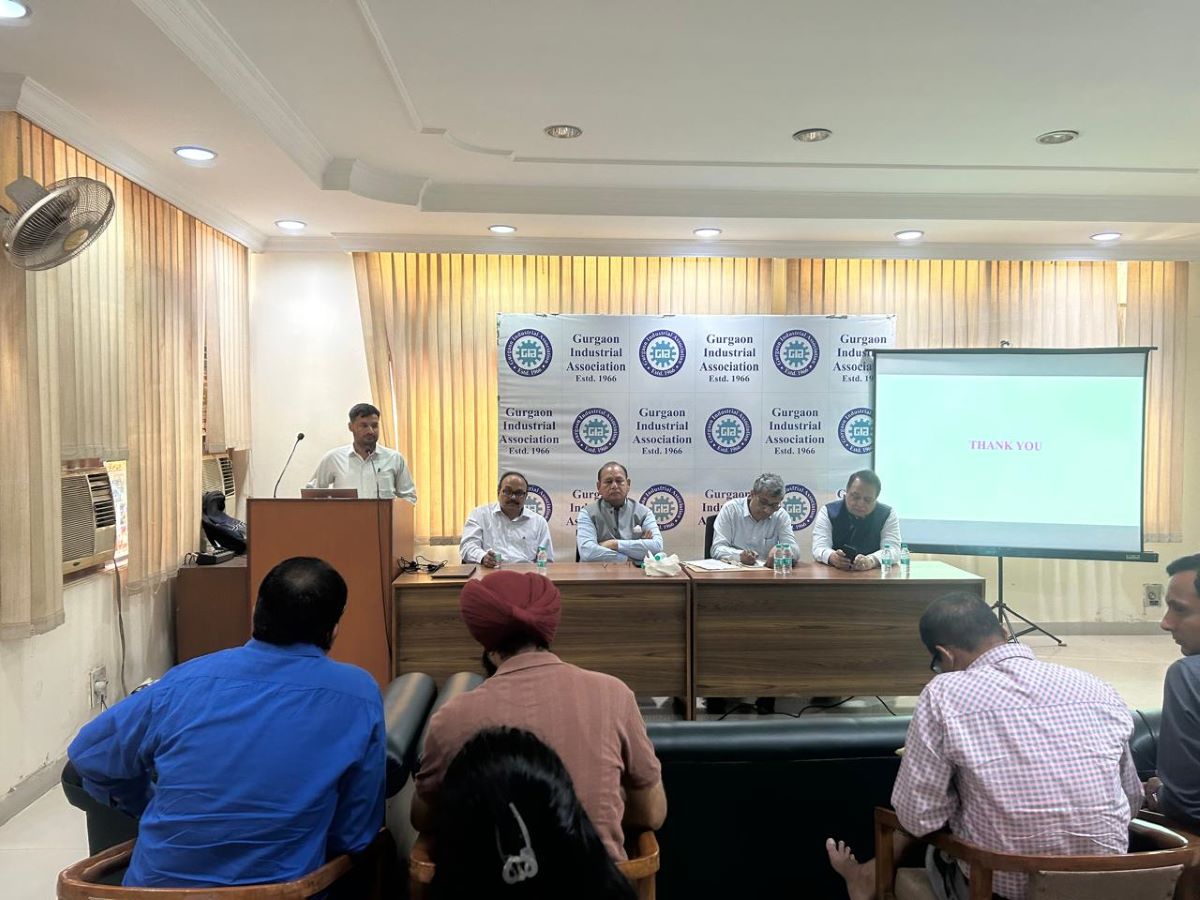
Mr Yadav from MSME DEPTT., Addressing TODAY in “Technical Textiles Awareness Program” Organized by The Technological Institute of Textile & Sciences Bhiwani-Under the Aegis of ‘Directorate of Micro, Small and Medium Enterprises, Government of Haryana’ held in Gurgaon elaborating on the incentives offered by Government of Haryana to MSMEs; The textile and technical textile sector has emerged as one of the most important industrial segments, supported by a range of government incentives aimed at encouraging investment, employment generation, sustainability, and technological advancement. Several policy measures have been introduced to attract entrepreneurs and facilitate the establishment and expansion of textile enterprises.
MUCH MORE
One of the major incentives available is the Capital Investment Subsidy. Textile enterprises setting up manufacturing facilities can avail themselves of a capital subsidy of up to 35% of the eligible investment, subject to a ceiling of approximately ₹2.5 crore. This support significantly reduces the initial capital burden and improves project viability.
In addition, industries can benefit from Stamp Duty Reimbursement. Eligible textile units may receive reimbursement of up to 80% of the stamp duty paid on the purchase or registration of land for industrial purposes, thereby lowering the cost of setting up manufacturing infrastructure.
The policy framework also provides for Interest Subsidy, enabling textile enterprises to reduce their financing costs. Furthermore, reimbursement of a portion of the net State GST (SGST) paid by the enterprise is available, linked to the level of fixed capital investment and subject to prescribed ceilings. Such incentives improve cash flow and enhance competitiveness.
To encourage employment generation, industries can avail themselves of various workforce support schemes, including assistance for skill development and employee training programs. Freight assistance and logistics-related support may also be available under specific schemes to facilitate market access.
The government has also introduced incentives related to utilities and risk management. Eligible enterprises can claim exemptions or reimbursements on electricity duty, while support is available for fire insurance premiums, with reimbursement of up to 75% of the premium amount, subject to prescribed annual limits.
Sustainability and environmental compliance have received special attention under the policy framework. Textile units establishing Effluent Treatment Plants (ETPs) or adopting Zero Liquid Discharge (ZLD) technologies can receive financial assistance and reimbursement for a portion of the investment made in environmental infrastructure.
Similarly, under Energy Conservation Schemes, enterprises can claim reimbursement for conducting energy audits. If industries implement energy-efficient machinery or technologies based on audit recommendations, a part of the capital expenditure incurred may also be reimbursed by the government.
The policy further promotes renewable energy adoption. Textile units investing in solar rooftop systems or other renewable energy solutions can avail themselves of additional incentives, helping reduce energy costs while contributing to environmental sustainability.
Overall, these incentives collectively aim to promote industrial growth, attract investment, encourage sustainable manufacturing practices, enhance competitiveness, and generate employment in the textile and technical textile sector. By leveraging these schemes effectively, enterprises can substantially reduce project costs and improve long-term operational efficiency.


 CONTACT US
