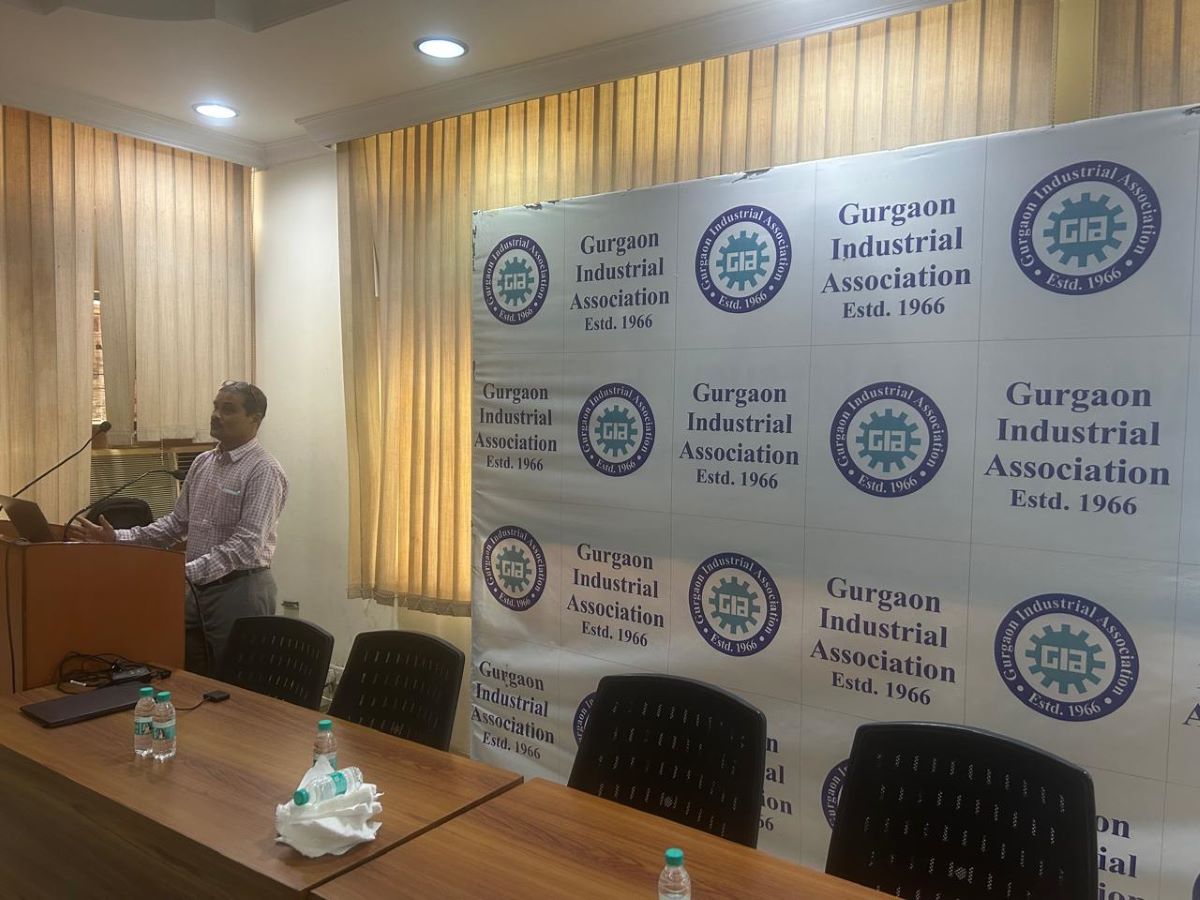
Dr Ajit Pattanayak - Assistant Professor at TIT&S Bhiwani addressing TODAY in “Technical Textiles Awareness Program” Organized by The Technological Institute of Textile & Sciences Bhiwani-Under the Aegis of ‘Directorate of Micro, Small and Medium Enterprises, Government of Haryana’ held in Gurgaon elaborating on the Technical Textiles dived into this stream of Textile sector stated that," The COVID-19 pandemic brought unprecedented attention to face masks and personal protective equipment (PPE), highlighting the critical role of nonwoven textiles in public health and safety. While masks were traditionally associated with medical professionals, they became an essential part of daily life for billions of people worldwide, creating significant demand for advanced filtration materials and technical textile products".
Most disposable medical and protective masks are manufactured using multi-layer nonwoven fabrics. Typically, a three-layer construction is used, comprising an outer protective layer, a middle filtration layer, and an inner comfort layer. The middle layer, often produced through the melt-blown process, is the most important component as it provides filtration efficiency by capturing fine particles, bacteria, and airborne contaminants.
One of the most widely recognized standards in respiratory protection is the N95 mask. The "95" designation indicates that the mask can filter at least 95 percent of airborne particles under specified testing conditions. This high filtration performance is achieved through specialized microfibres arranged in a highly porous structure that balances breathability and protection.
The rapid growth in demand for masks and hygiene products has accelerated the development of the nonwoven textiles industry. Nonwovens are now used extensively not only in healthcare applications but also in hygiene products, filtration systems, automotive interiors, construction materials, agriculture, and geotextiles. Their versatility, lightweight nature, cost-effectiveness, and functional performance make them one of the fastest-growing segments within the global technical textiles sector.
India has emerged as an important player in the technical textiles ecosystem. The country's technical textiles market has been expanding steadily, supported by government initiatives, increasing healthcare awareness, growing industrial applications, and rising consumer demand for high-performance products. The domestic industry is witnessing increased investments in nonwoven manufacturing, melt-blown technology, and advanced fibre processing capabilities.
Despite significant progress, certain specialized raw materials and high-performance textile components continue to be imported. However, the focus on indigenous manufacturing, innovation, and technology adoption is gradually strengthening India's self-reliance in this segment. With continued investments in research, infrastructure, and skill development, India is well-positioned to become a global hub for technical textiles and advanced nonwoven products.
The future of the sector will be driven by material innovation, sustainability, improved filtration technologies, and the development of functional textiles that address emerging healthcare, environmental, and industrial challenges. As awareness of health, hygiene, and safety continues to grow, nonwoven fabrics and technical textiles are expected to play an increasingly important role in everyday life and economic development.


 CONTACT US
